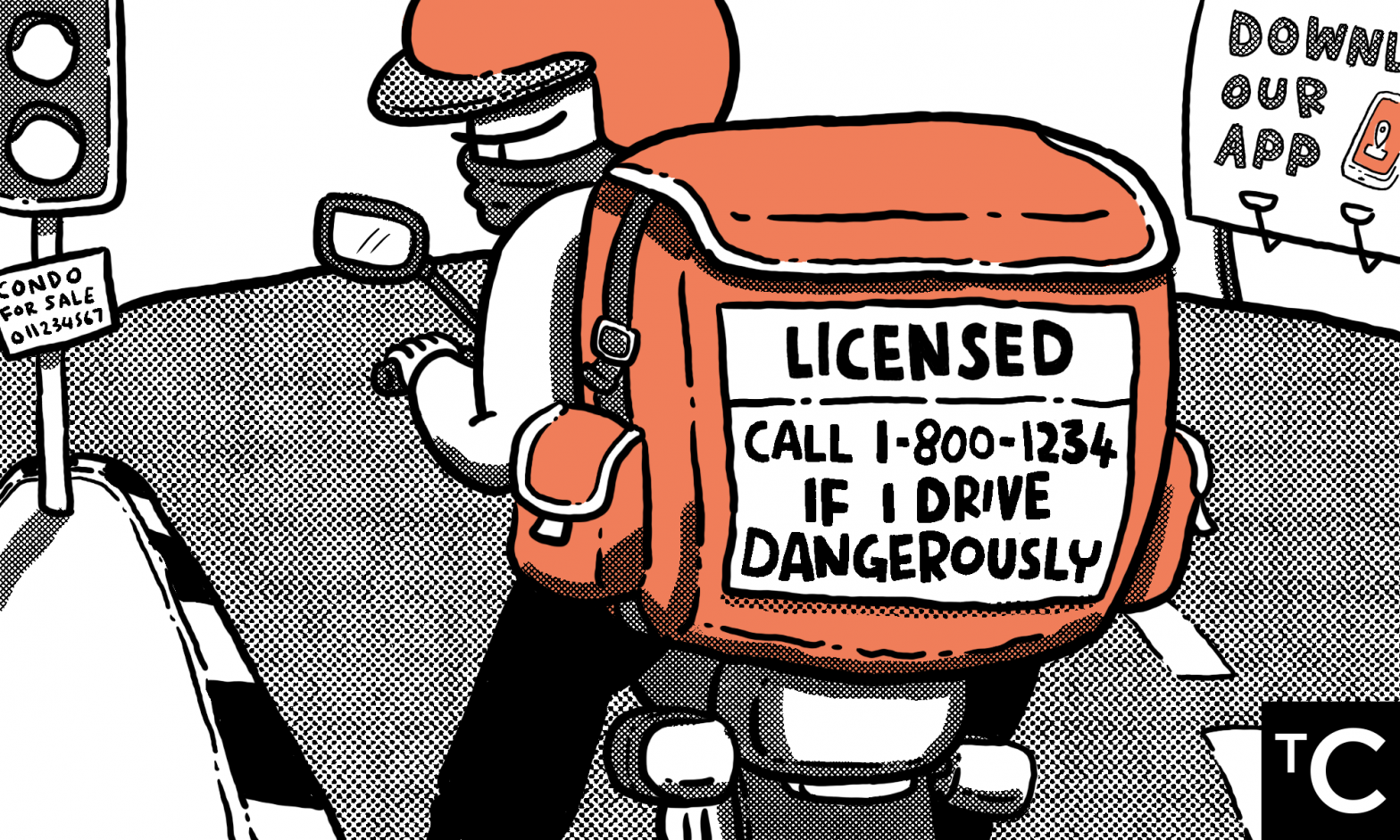
Lesen P-Hailing: Adakah Malaysia Memerlukannya?

Jumlah kemalangan jalan raya dan salah laku lalu lintas yang melibatkaan penunggang penghantaran telah menarik perhatian agensi kerajaan dan juga orang ramai. Hal ini juga didorong oleh peningkatan perkhidmatan penghantaran pada masa Perintah Kawalan Pergerakan (“Movement Control Order” atau “MCO”) ini.

Hasilnya, pada bulan Ogos 2020, Kementerian Pengangkutan Malaysia telah mengumumkan rancangan untuk memperkenalkan lesen parcel-hailing ataupun p-hailing dengan tujuan untuk memastikan keselamatan jalan raya serta menyediakan suasana yang memudahkan perjalanan industri p-hailing.

Memandangkan kekerapan berlakunya kemalangan motosikal di Malaysia, persoalan yang ingin kami utarakan adalah: bagaimanakah pengenalan lesen baharu ini dapat menurunkan kadar kemalangan dan meningkatkan keselamatan jalan raya? Selain daripada pertimbangan berkaitan keselamatan jalan raya, apakah pertimbangan lain yang relevan? Akhir sekali, bagaimanakah lesen ini akan memberi kesan kepada mata pencarian penunggang p-hailing yang bilangannya semakin meningkat sejak kebelakangan ini?

Isu keselamatan jalan raya

Menurut Timbalan Menteri Pengangkutan Malaysia, 64% daripada kematian akibat kemalangan jalan raya pada tahun 2019 melibatkan penunggang motosikal. Kajian terbaharu oleh Institut Penyelidikan Keselamatan Jalan Raya Malaysia (MIROS) yang dilaksanakan pada 11 jalan utama di Kuala Lumpur mendapati bahawa penunggang p-hailing menyumbang kepada 64% (statistik serupa adalah secara kebetulan) daripada jumlah salah laku peraturan lalu lintas yang membabitkan penunggang motosikal. Penemuan ini menunjukkan bahawa terdapat kesan yang ketara daripada penunggang p-hailing terhadap keselamatan jalan raya.

Tetapi bagaimanakah lesen p-hailing mampu mengubah tingkah laku penunggang p-hailing di jalan raya? Kementerian Pengangkutan masih belum memberikan butiran lengkap, tetapi Timbalan Menteri Pengangkutan setakat ini telah menyatakan bahawa lesen p-hailing yang bakal diperkenalkan nanti akan memerlukan penunggang p-hailing untuk menjalani pemeriksaan kesihatan dan memiliki perlindungan insurans kemalangan diri. Jika kita menggunakan lesen e-hailing yang diperkenalkan pada tahun 2018 sebagai petunjuk, lesen p-hailing mungkin akan mensyaratkan bahawa penunggang p-hailing adalah warganegara Malaysia atau pemastautin tetap, berumur 21 tahun ke atas, mempunyai kelas lesen memandu motosikal yang sewajarnya dan tidak memiliki rekod jenayah. Penunggang p-hailing mungkin juga harus lulus pemeriksaan perubatan, pemeriksaan kenderaan dan ujian pelesenan.

Selain memastikan kebolehpakaian (“road-worthiness” ) kenderaan yang digunakan, adalah kurang jelas bagaimana ciri-ciri yang dinyatakan di atas akan dapat mengubah tingkah laku penunggang p-hailing dan menangani masalah keselamatan jalan raya. Ujian dan video kesedaran kesemuanya merupakan sesuatu usaha tersebut membawa kesan, maka kesemua penunggang motosikal sepatutnya perlu patuh kepada syarat keselamatan lesen p-hailing , demi untuk memastikan keselamatan jalan raya dan pengurangan kemalangan.

Sebarang peraturan seharusnya menangani punca asal atau faktor yang membentuk tingkah laku penunggang p-hailing. Salah satu sebab mungkin mengapa penunggang p-hailing memandu secara berbahaya adalah kerana struktur insentif pekerjaan gig – penghantaran lebih cepat bermaksud lebih banyak pesanan yang dapat dikendalikan dalam setiap jam bagi menghasilkan pendapatan yang lebih tinggi.

Sekiranya peningkatan keselamatan jalan raya di kalangan penunggang p-hailing merupakan objektif utama, maka adalah lebih berkesan sekiranya agensi kerajaan bersama platform gig bekerjasama untuk mengambil langkah bagi mengesan pemanduan berbahaya, misalnya melalui speedometer dalam aplikasi, serta memasukkan pematuhan peraturan lalu lintas ke dalam dasar ganjaran dan algoritma mereka. Selain itu, langkah keselamatan jalan raya yang lebih umum harus dilaksanakan ke atas kesemua pemandu di jalan raya, seperti meningkatkan bilangan kamera lalu lintas, penguatkuasaan sistem demerit, menyediakan lebih banyak lorong motosikal dan sebagainya.

Rasional di sebalik pelesenan

Lazimnya, lesen pekerjaan merupakan suatu kaedah kawal setia yang digunakan untuk melindungi pengguna daripada penyedia perkhidmatan yang tidak mahir atau tidak bertanggungjawab. Hal ini biasanya diwajibkan untuk pekerjaan yang berpotensi untuk menimbulkan risiko dan kos yang besar kepada pengguna seperti profesional kesihatan, arkitek, peguam dan sebagainya.

Dengan memperkenalkan lesen untuk profesion atau pekerjaan, pihak berkuasa dapat menetapkan syarat kemasukan dan piawaian industri serta melakukan tindakan disiplin dan tatatertib terhadap sebarang salah laku. Dalam hal ini, keputusan untuk mewajibkan lesen pemandu untuk e-hailing dan teksi adalah wajar, kerana mereka mempunyai tanggungjawab untuk menjaga keselamatan setiap penunggang yang menaiki kenderaan mereka.

Namun adakah penunggang p-hailing mempunyai tanggungjawab yang sama sepertimana pemandu e-hailing ataupun teksi? Penghantaran pesanan makanan yang salah sememangnya menjengkelkan, tetapi ia tidak mengancam keselamatan pengguna. Dalam kes kecurian baranga pula, struktur insentif yang sedia ada dijangka akan dapat menangani masalah tersebut dalam masa yang singkat. Persoalannya sekarang, bagaimanakah pelesenan p-hailing terhadap penunggang penghantaran akan dapat melindungi pengguna?

Impak dasar yang tidak dijangka

Lantaran daripada itu, pergunaan lesen p-hailing untuk penunggang penghantaran dapat membawa kepada keadaan kawal selia yang berlebihan. Terdapat juga kemungkinan hal ini akan mengakibatkan kesan yang tidak diingini.

Pertama sekali, jika lesen p-hailing mempunyai syarat usia yang sama dengan lesen e-hailing, perkara ini akan menghalang mereka yang berumur di bawah 21 tahun daripada terbabit dalam bidang penghantaran bungkusan. Sumber kami dari industri menunjukkan bahawa sebilangan besar daripada penunggang penghantaran bungkusan, iaitu sekitar 40% – 60% dari jumlah tenaga kerja keseluruhan, tidak akan layak bekerja jika syarat umur sebegini dilaksanakan. Memandang demografi kumpulan ini – yang mana rata-ratanya tidak mempunyai kelayakan pengajian tinggi, dan berasal dari isi rumah yang berpendapatan rendah – maka ramai di kalangan mereka yang pasti terkesan.

Kedua, apakah kesan lesen p-hailing ini kepada para freelancer yang tidak terikat dengan sebarang platform gig? Sebilangan besar penunggang p-hailing yang bekerja dengan platform gig akan didorong untuk mematuhi peraturan p-hailing kerana platform gig akan memastikan kepatuhan yang sewajarnya. Manakala, penunggang penghantaran yang tidak bekerja dengan platform gig akan terpaksa menanggung beban pematuhan lesen p-hailing secara sendirian, ataupun mungkin sekali, memilih untuk tidak mendapatkan lesen, dan sekaligus beroperasi secara haram.

Tambahan pula, bagi penunggang penghantaran yang tidak bergantung kepada sebarang platform gig, mereka selalunya bekerja dengan syarikat yang kecil dan sederhana. Dengan adanya pelesenan, syarikat-syarikat tersebut mungkin terpaksa untuk menggunakan platform gig untuk keperluaan penghantaran mereka, lantas mengurangkan nisbah keuntungan mereka, mungkin sehingga tahap antara 25% hingga 30%. Bagi syarikat kecil dan sederhana, perbezaan keuntungan sebegini mampu memaksa mereka untuk menggulungkan tikar perniagaan mereka.

Ketiga dan yang terakhir, pengenalan lesen p-hailing juga boleh memberi kesan kepada mereka yang menginginkan pendapatan sampingan melalui pekerjaan gig. Kajian gig, termasuklah penunggang penghantaran, ingin melakukan pekerjaan gig hanya secara sambilan dalam jangkamasa terdekat. Hasil pengalaman dari pelaksanaan lesen e-hailing, kami percaya bahawa pengenalan skim pelesenan p-hailing boleh membantutkan peluang pekerjaan bagi pekerja sambilan akibat daripada halangan tambahan seperti yuran lesen, bahasa yang digunakan dalam pemeriksaan, dan sebagainya.

Kesimpulan

Pertumbuhan pesat mana-mana kelas atau industri pekerjaan harus disertai dengan peraturan dan penguatkuasaan untuk pengurangkan risiko atau kos berkaitan dengan perkhidmatan tersebut kepada pihak awam. Namun begitu, harus diingatkan bahawa sebarang penyelesaian bagi pekerjaan gig tidak semestinya boleh digunakan secara pukul rata. Pengenalan sesuatu kerangka peraturan yang dihasratkan bagi menangani risiko yang dihadapi oleh satu pekerjaan gig, tidak semestinya boleh diguna pakai bagi pekerjaan gig yang lain. Keperluan pelesenan dan peraturan haruslah disesuaikan kepada risiko yang khusus bagi sesuatu pekerjaan dan perkhidmatan gi yang tertentu, bagi mengelakkan kesan yang tidak diingini kepada pekerja, pengguna, dan industri secara umumnya.

Emel pandangan atau cadangan anda ke editorial@centre.my
The Capitol Hill Riot And Its Lessons On Hate Speech

At the time of this writing, Joe Biden will be sworn in as the 46th President of the United States, replacing Donald Trump in the White House after four tumultuous years. But this Inauguration will be like no other. Washington DC is not only on lockdown; the city also has scores of National Guard troops patrolling its streets. Senior officials have pleaded with the public not to attend the ceremony in person in fear of possible security threats.

The immense security surrounding Inauguration Day is a result of the Capitol Hill insurrection just two weeks ago, which claimed five deaths and is widely seen as incited by Trump himself through his social media postings. The outgoing president has since been permanently suspended from the social media platform Twitter to prevent further incitement. Other social media companies have followed suit with varying intensities of action; Facebook has blocked Trump on all its platforms at least until the end of his term, Snapchat has suspended his account indefinitely, while Reddit has banned the ‘r/DonaldTrump’ subreddit group. 

These decisions by the social media giants are arguably too late, coming after years of inaction and under-reaction. It took the recent insurrection in Washington for Twitter, for example, to publish a statement with unprecedented detail of its decision-making process on regulating speech that could incite violence. 

Social media platforms are facing a reckoning, a far cry from the days when Twitter called itself “the free speech wing of the free speech party”. By and large, social media users agree with constraining hateful speech online; Malaysians at least agree that there should be limits and consequences to hate speech as we found in our recent study.

In light of this reckoning, what is needed is a clearly defined framework to manage different levels of hate speech seriousness, before it’s too late. The Capitol Hill insurrection is a case in point: although Trump’s final tweets were the ones that ultimately got him kicked off Twitter, there have been no shortage of similarly inciting tweets from him over the past few years that should have warranted suspension.

Our study in Malaysia, completed late last year, proposed categorising hate speech into increasing levels of seriousness to enable proportionate and effective responses toward different types of hate speech. It is also crucial to localise the scope of what constitutes hate speech, something that needs greater investment by social media platforms and regulators alike.

There is also the question of legislating liability. In 2019, the UK House of Commons debated the idea of conferring legal liability on tech companies for harmful content posted online. This was eventually proposed as legislation late last year. If passed, social media companies would be liable to fines of up to 10% of turnover in the UK if they fail to remove or limit harmful content on their platforms.

Whether management of online speech undergoes a significant change remains to be seen. Tech giants have long grappled with handling hateful speech, misinformation, and demagoguery in other diverse societies, in the US and around the world such as in India and Brazil. Should we continue to muddle along in Malaysia? Examples of hateful speech abounds online (especially against groups of people blamed for spreading Covid-19) in spite of current guidelines on social media companies.

The Capitol Hill riot serves as a potent reminder to governments and social media platforms of their role in stemming hateful content. We may not expect an event as violent and shocking as the Capitol Hill riot to happen here in Malaysia, but the same underlying forces are present within our society. A more transparent and consistent approach from social media platforms as well as regulators against online hate speech is crucial. It should not take a deadly event to precipitate this work.

Bukan Semua Pekerja Gig Sama

Pekerjaan gig menjadi semakin popular dan bertambah penting di Malaysia semenjak wabak COVID-19 melanda negara. Sejak penguatkuasaan Perintah Kawalan Pergerakan (PKP) pertama pada bulan Mac tahun 2020, platform gig seperti Grab dan Foodpanda telah mengalami peningkatan permintaan perkhidmatan penghantaran dan juga permohonan untuk menjadi penghantar. Hal ini menarik perhatian penyelidik dan penggubal dasar serta pihak media yang tertumpu kepada isu kesejahteraan dan kebajikan pekerja gig.

Namun begitu, satu perkara yang ketara dalam penulisan dan perbincangan isu ini ialah dari segi penggunaan istilah. Frasa ‘pekerja gig’ digunakan untuk merujuk kepada berbagai jenis pekerjaan gig, seolah-olah semua pekerja gig adalah sama. Realitinya, banyak perbezaan antara seorang penghantar makanan dan seorang yang bekerja sendiri ala ‘freelancer’. Sekiranya istilah ini tidak diperincikan, ia bakal menimbulkan masalah dalam usaha menggubal dasar yang berkesan.

Mentafsirkan istilah “pekerja gig”

Konsep pekerjaan gig bukannya suatu perkara yang baharu. Sebelum ini, pekerja kontrak biasanya dikenali sebagai kontraktor bebas dan ‘freelancer’ yang mengambil projek ataupun ‘gigs’ di mana mereka tidak terikat dengan kontrak kerja, sama ada secara sambilan atau sepenuh masa. Istilah ‘pekerja gig’ mulai popular di Malaysia pada awal tahun 2010 ketika platform perkongsian perjalanan (ride-sharing) Uber dan Grab memasuki pasaran.

Walau bagaimanapun, istilah ‘pekerja gig’ seperti yang digunakan sekarang meliputi pelbagai jenis pekerjaan dan kemahiran serta keterampilan, dari penghantar makanan hingga pereka grafik bebas. Laporan Prospek Ekonomi 2021 mendefinisikan ‘pekerja gig’ sebagai seseorang yang melakukan pekerjaan sementara melalui kontrak jangka pendek. Jabatan Perangkaan Malaysia (DOSM) pula mengkategorikan kesemua ‘pekerja gig’ sebagai kontraktor bebas atau pekerja sendiri – iaitu skop pekerja yang agak luas.

Pekerja gig memang boleh dibezakan dari segi segi sifat pekerjaan, tahap kemahiran, profil demografi dan sebagainya. Namun begitu, satu aspek pembezaan yang, pada pendapat kami, boleh membantu penggubalan dasar yang lebih jelas, ialah dari segi hubungan kuasa (power relationships) antara pekerja dan platform gig.

Bagi pekerja gig yang boleh dianggap sebagai ‘berkolar putih’ dan bekerja sebagai pereka grafik, penulis iklan, penulis sambilan, pengaturcara dan sebagainya, platform gig seperti Upwork dan TaskRabbit berfungsi sebagai pasaran atau pengantara. Di situ, mereka akan memaparkan perkhidmatan, porfolio dan harga perkhidmatan mereka. Walaupun masih terbatas dengan hukum penawaran dan permintaan yang biasa, secara relatif, pekerja ini boleh memilih dan mengawal jumlah dan bentuk pekerjaan yang mereka terima dan serta harga tawaran. Platform gig tersebut akan mengambil komisen tetapi tidak menentukan atau menawarkan pekerjaan kepada pekerja tersebut secara langsung.

Sebaliknya, mereka yang melakukan pekerjaan gig seperti ‘e-hailing’, penghantar makanan dan sebagainya mempunyai hubungan yang sangat berbeza dengan platform gig mereka. Tawaran tugas atau gig ditentukan menggunakan algoritma proprietari khas berdasarkan radius lokasi pekerja serta faktor-faktor lain. Caj untuk setiap tugas ditentukan oleh platform gig tersebut. Walaupun pekerja ‘bebas’ menerima atau menolak pekerjaan yang ditawarkan, kebanyakkan platform gig akan mengenakan ‘denda’ untuk pekerja gig yang mempunyai kadar penerimaan pekerjaan yang rendah.

Laporan dari Institute for Innovation and Public Purpose di University College London (UCL) ) Julai lalu telah mengutarakan cadangan untuk membezakan pekerja gig berdasarkan tahap kawalan majikan atau platform berbanding dengan kebergantungan pekerja terhadapnya. Pekerja yang tidak bergantung secara khusus pada satu platform gig untuk menetapkan pekerjaan mereka, boleh dikategorikan sebagai ‘kontraktor bebas’ (Rajah 1).

Sebaliknya, pekerja yang bergantung pada platform gig untuk menerima pekerjaan atau mempunyai aspek pekerjaan mereka yang ditetapkan oleh platform gig lebih sesuai dikategorikan sebagai ‘kontraktor bergantung’ (Rajah 1).


Rajah 1: Kerangka Kebergantungan dan Kawalan

Sumber: UCL Institute for Innovation and Public Purpose.

Mereka yang dikategorikan sebagai ‘kontraktor bebas’ atau ‘kontraktor bergantung’ memerlukan jaringan keselamatan sosial dan pelindungan pekerja yang berbeza.

Risiko pengunaan istilah yang terlalu luas dalam penggubalan dasar

Memandangkan wujudnya kepelbagaian dari segi jenis pekerja dan hubungan dengan dalam platform gig, menggunakan istilah ‘pekerja gig’ untuk menggambarkan kesemua pekerja dengan kontrak pendek membawa risiko apabila menggubal dasar. Salah satu contoh ialah penguatkuasaan Assembly Bill No. 5 (AB5) di California pada akhir 2019, yang mengkategorikan semula pekerja gig (termasuk pekerja bebas) sebagai pekerja sepenuh masa.

Pelaksanaan AB5 membawa kesan yang tidak diingini apabila ia telah menyebabkan kebanyakan pekerja kontrak kehilangan pekerjaan mereka. Ramai pekerja bebas ditamatkan kontrak mereka, sama ada kerana tidak boleh menjamin komitmen terhadap struktur tugas baru, atau kerana syarikat di mana mereka menawarkan perhidmatan tidak boleh menanggung kos tambahan seperti kos insurans kesihatan. Definisi pekerjaan dalam AB5 yang terlalu ketat juga mengehadkan kegiatan komuniti seni yang sebenarnya mahukan lebih banyak fleksibiliti dalam menjalankan tugas mereka.

Setahun selepas penguatkuasaan AB5, Uber, Lyft, Doordash dan syarikat platform gig lain mengemukakan California Proposition 22 (Prop 22), iaitu rang undang-undang bukan kerajaan yang bertujuan meminda AB5 dan menentukan semula status pekerjaan pekerja gig/pekerja bebas. Lebih separuh dari mereka yang mengundi (58%) memilih untuk mentakrifkan semula pekerja gig. Mereka yang merupakan pemandu e-hailing dan penghantar makanan ditakrifkan sebagai kontraktor yang layak mendapat jaminan pendapatan minimum sekurang-kurangnya 120% dari gaji minimum sejam setiap negeri serta  bantuan kesihatan.

Perbahasan dan pertukaran perundangan dari AB5 ke Prop 22 perlu dijadikan peringatan kepada penggubal dasar supaya lebih teliti dengan penggunaan terminologi ‘pekerja gig’. Sokongan dan bantuan yang diperlukan oleh ‘kontraktor bebas’ tidak sama dengan pekerja gig yang lebih bergantung kepada platform gig seperti pengendali penghantaran. ‘Kontraktor bebas’ mungkin memerlukan lebih banyak sokongan dari segi penyediaan kontrak perkhidmatan yang sesuai dan perlindungan dari pelanggan yang tidak bertanggungjawab. ‘Kontraktor bergantung’ lebih banyak memerlukan bantuan seperti liputan jaringan keselamatan sosial yang lebih luas, dan perlindungan dari algoritma platform yang mungkin membebankan mereka.

<h2Penggunaan istilah yang lebih baik

Laporan Prospek Ekonomi Malaysia 2021 telah menyatakan ekonomi gig sebagai suatu sektor pertumbuhan baru. (Laporan itu juga memetik kajian kami mengenai pekerja gig, di mana kami dapati ia menjadi sumber pendapatan yang penting tetapi pada masa yang sama, pekerja gig tidak mempunyai perlindungan sosial yang mencukupi*). Bagi meneliti isu ini, kerajaan telah menubuhkan sebuah jawatankuasa yang terdiri daripada perwakilan dari Kementerian Sumber Manusia, Kementerian Belia dan Sukan, dan Kementerian Perdagangan Dalam Negeri dan Hal Ehwal Pengguna untuk mengkaji perundangan untuk melindungi pekerja gig.

*Ketika artikel ini ditulis, pekerja gig hanya layak mendapat perlindungan yang dilanggan secara sukarela, seperti Skim Kecederaan Pekerjaa Sendiri (SEEIS) dan i-Saraan.

Walaupun negara-negara di seluruh dunia, termasuk Malaysia, terus mengkaji undang-undang berkaitan pekerja gig, satu perkara yang jelas ialah mereka tidak semuanya sama. Berdasarkan hubungan pekerja gig dengan platform gig, jenis kerja gig itu sendiri dan serta tahap kemahiran yang sedia ada, mereka terdedah kepada risiko yang berbeza.

Oleh yang demikian, kerajaan perlu menyediakan terminologi yang khusus untuk setiap segmen pekerja agar untuk dasar dan undang-undang yang sesuai dan berkesan dapat dirumuskan – pembezaan yang diutarakan dalam kajian oleh Institut Maklumat dan Analisis Pasaran Buruh (ILMIA)  boleh dijadikan titik permulaan yang baik dan boleh digunapakai apabila menggubal dasar pada masa hadapan. 

Crowd work adalah pekerjaan berdasarkan permintaan berasaskan laman web, di mana tugas tersebut boleh dilakukan melalui komputer dari mana-mana. Sebagai contoh, menulis iklan, kerja terjemahan dan coding.

Gig work adalah pekerjaan berdasarkan lokasi yang bergantung kepada platform, di mana individu terpilih dihubungkan dengan tugas oleh platform atau aplikasi berdasarkan permintaan, dan pekerjaan diselesaikan di luar talian. Sebagai contoh, e-hailing, penghantaran makanan dan perkhidmatan rumah tangga.

Sumber: Gani, H. (2020). The gig economy: Platformisation and fragmentation of work. Institute of Labour Market Information and Analysis (ILMIA).

Di tengah-tengah perbincangan dasar mengenai peraturan pekerja gig adalah masalah mengklasifikasikan pekerja dengan keperluan dan cabaran yang berbeza. Bagaimana penggubal undang-undang menentukan dan memahami sifat segmen pekerja yang berbeza akan menentukan sama ada dasar atau perundangan masa depan benar-benar memenuhi keperluan mereka.

Emel pandangan atau cadangan anda ke editorial@centre.my
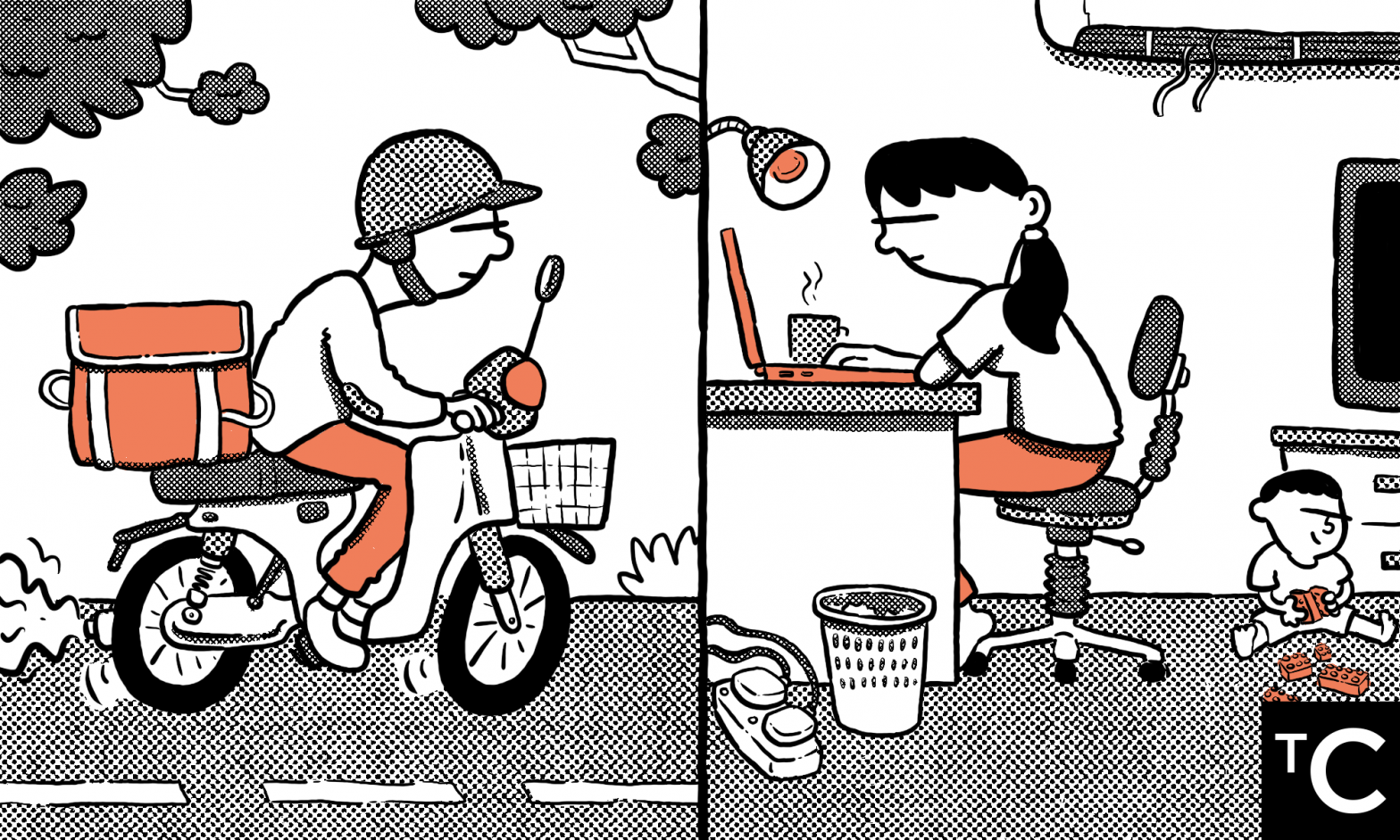
The P-Hailing License: A Case Of Over-Regulation?

The number of road accidents and traffic violations involving delivery riders has become a matter of some concern amongst government agencies and the public, fueled by the growth of delivery services in these MCO times.

Perhaps in response, in August 2020 the Ministry of Transport (MOT) announced plans to introduce a parcel-hailing or p-hailing license, with the stated aims of ensuring road safety as well as providing a conducive environment for the p-hailing industry.

Given the prevalence of motorcycle accidents in Malaysia, we ask: how would the introduction of this new license drive down the accident rate and improve road safety? And apart from road safety considerations, what are sufficient conditions to introduce an occupational or service provision license? Finally, how might such licenses affect the burgeoning pool of delivery riders trying to make a living today?

The road safety issue

According to Malaysia’s Deputy Transport Minister, 64% of road accident fatalities in 2019 involved motorcyclists. A more recent and targeted traffic monitoring study of 11 main roads in Kuala Lumpur by MIROS discovered that p-hailing riders comprised about 64% (similar statistics coincidental) of motorcyclist traffic violations. These figures provide evidence, to some extent, of the impact of p-hailing riders on road safety.

But how might a p-hailing license change p-hailing rider behaviour on the roads? The MOT has yet to release full details, but the Deputy Transport Minister has so far disclosed that the impending p-hailing license would require parcel delivery riders to pass a health screening and possess personal accident insurance coverage. If the e-hailing license introduced in 2018 is any indication, the p-hailing license may also require delivery riders to be a Malaysian citizen or permanent resident, be 21 years old and above, have the right class of motorbike driving licence and not have a criminal record. The delivery rider may also have to pass a medical check, vehicle inspection and licensing exam.

Apart from ensuring vehicle road-worthiness, it is unclear how the above conditions, if implemented, would change delivery riders’ road behaviour and address road safety concerns. Exams and awareness videos are all well and good, but there is little to suggest that these are effective means of improving compliance to traffic rules. If that were the case, then all motorcyclists, whether p-hailing riders or no, should be subject to the safety requirements of a p-hailing license in the name of road safety and accident reduction.

Regulations should address the root causes or factors that shape the road behaviours of p-hailing riders. One of the reasons that delivery riders engage in dangerous driving behaviours is the inherent incentive structure of gig work – faster deliveries mean more gigs per hour of work, which means more income. Positive customer ratings as well as the gig platform’s reward algorithm for completed gigs also incentivise the delivery rider to take more chances on the road.

If improving road safety amongst delivery riders is the core objective, it would be better served by corralling major gig platforms into devising measures to detect dangerous driving, such as in-app speedometers, and to integrate traffic rule compliance into their reward policies and algorithms. Apart from these are the more general road safety measures which should apply to all motorists such as increasing traffic cameras, enforcement of the demerits system, more motorcycle lanes, among others.

The license rationale issue

Conventionally, an occupational license is a regulatory tool used to protect consumers from incompetent or unscrupulous service providers. These are typically imposed on occupations that can present significant risk and cost to the consumers such as health professionals, architects, lawyers and so on.

By introducing a license to a profession or occupation, government authorities may set entrance requirements and industry standards as well as undertake disciplinary actions against any occupational malpractice. In this regard, it makes sense to license e-hailing and taxi drivers, all of whom have the consumer’s safety in their hands every time a passenger steps into their vehicle.

However, do p-hailing delivery riders have consumer safety repercussions as per e-hailing drivers? Food order mix-ups are certainly aggravating, but the parcel delivery service for a consumer is hardly life-threatening. Even against cases of outright parcel theft, the incentive structure in-built into gig platforms would quickly weed out such occurrences amongst delivery riders. The question remains then, in what way would a p-hailing license on delivery riders protect the consumers?

Potential unintended consequences

In view of the above arguments, introducing a p-hailing license on delivery riders (as opposed to a service provision license on gig platforms) could be a case of over-regulation. There is also the issue of unintended consequences.

Firstly, if the p-hailing license carries the same age requirement as the e-hailing license, this would prohibit those below 21 years old from performing parcel delivery gigs. Our industry sources indicate that a sizable proportion of gig delivery riders, around 40-60% of the total force, would not make this age cut. Given the typical demographics of this group – no tertiary qualifications, low-income households – that’s a sobering thought.

Secondly, what would a p-hailing license mean for freelancers unattached to any gig platform? The majority of delivery riders who work with gig platforms would most likely comply with p-hailing regulations as most gig platforms would want to ensure and support compliance. Non-platform delivery riders will likely have to shoulder the burden of licensing on their own, or perhaps more likely, choose to become unlicensed and thus ‘illegal’.

Furthermore, these non-platform delivery riders typically serve very small businesses. As a result of licensing, these small businesses may be forced to use gig platforms for their delivery needs, reducing their business margins further, perhaps up to 25-30% of their revenue. For a small business, it could mean the difference between staying open or closing shop.

Thirdly and finally, the introduction of a p-hailing license could also affect those of age who look to delivery gigs as a source of side income. Our gig worker study last year highlighted the significant proportion of gig workers, including delivery riders, who want to perform gigs on a part-time basis for the foreseeable future. Judging from the experience of the e-hailing license, introducing p-hailing licensing could shut the door on part-timers due to the added barriers of entry in the licensing fee, the language of examination, amongst others.

Conclusion

The rapid growth of any occupational class or industry should be accompanied by regulations and enforcement to mitigate any risks or public costs associated with the emerging services. However, there is no one size fits all solution to the booming gig industry, which includes parcel delivery. Imposing a regulatory framework meant to address risks in one type of gig occupation may not necessarily work for another. It is crucial to tailor licensing requirements and other regulations to the specific risks presented by the occupation or service, else it may produce costly unintended outcomes to the worker, the consumer, and the industry.

Email us your views or suggestions at editorial@centre.my

The Financing Of RapidKL Bus Services Needs A Major Rethink

Since November 2020, RapidKL has terminated 13 bus routes throughout the Klang Valley, to general outcry from public transport users. Low ridership was stated as the main factor, driving RapidKL to restructure existing routes in order to optimise resources and assets. An outcome of this restructuring so far has been the scaling down of several bus routes in Shah Alam, Kajang and central KL.

The COVID-19 pandemic has undoubtedly been bad for public transport ridership, with the implementation of social distancing SOPs, a workforce that is increasingly working from home, and the general fear of being in public spaces. To some extent, the government’s introduction of the temporary MY30 monthly pass in June 2020 – extended to this year in Budget 2021 – can be seen as a way to mitigate the low ridership problem. Ridership however remains low. Prasarana, who owns bus operator RapidKL, estimated a ridership reduction of 40% from pre-pandemic levels.

With this as context, we ask the basic question: does low ridership justify the cutting of bus services? We argue that it does not and that the fundamental issue lies in how bus services are financed.

Subsidised, up to a point

The majority of transit bus services in the Klang Valley are operated by Prasarana which is owned and financed by the federal government. Prasarana receives government funds for capital expenditure but not for operating expenditure, the latter of which is meant to be covered by revenues from fares and other income-generating sources. As an indication of the shortfall: Prasarana’s total operating expenditure (total, not only for bus services) comes up to around RM300 million monthly i.e. around RM3.6 billion annually, but it receives around RM1.1 billion in revenues.

Given this shortfall it is unsurprising that when fare revenues fall further due to lower ridership and cheaper monthly passes, Prasarana is forced to limit their losses by cost-rationalising and terminating bus routes.

Realistically, even with the gradual roll-out of COVID-19 vaccines, it is unlikely that we’ll see ridership return to pre-pandemic levels in the next 1-2 years. Service operators will have to sustain significant losses in the near term which would likely lead to even more cost-rationalisation and route-cutting. But bus services continue to be a vital public good to the commuters who have little other choice; these are the same ones facing wage reductions and employment shifts since the MCO.

Clearly, something has to change. It is time that we articulate how we value the benefits and multiplier effects of public goods like transit bus services – especially in times and events of low ridership – and use that as a basis for rethinking how these services should be financed.

The value of public goods

Supporting bus services has clear social and economic benefits such as mobility for vulnerable groups, reduced urban congestion, reductions in carbon emissions, and an increase in economic productivity. The American Public Transport Association shows that every $1 billion annually invested into public transportation delivers up to $3.5 billion of GDP generation.

Recognising the value of public goods go hand-in-hand with sensible financing. In 2018, Singapore allocated $1.1 billion under the Bus Service Enhancement Programme (BSEP). Alongside subsidising bus services operations, the program also increased buses on the road and added new bus routes to serve a wider network.

While Malaysia’s PENJANA stimulus package in Budget 2021 supports public transport users through fare subsidies, it did not specify how public transport service providers would be supported in maintaining their operations. Given the current shortfalls, by funding only capital expenditure, and by hoping that fare revenues will cover operating costs, transit bus services will continue to be starved of sufficient resourcing. The lofty aim of increasing public transport modal share, never mind having a world-class public transportation system, will remain unachieved.

Where can increased funding come from?

Increasing government funding to cover bus service operations is admittedly difficult. In many countries including Malaysia, public transport is financed from general taxation, which means that public transport must compete with other public goods and programs for funding from a shared pool. Compared to education or health, spending on bus services could be seen as much lower priority, despite the importance of public transportation in enabling employment opportunities and supporting the most vulnerable communities.

One approach to consider in mitigating Prasarana’s losses from operating the majority of Klang Valley’s bus services is earmarked taxes. Earmarked taxes is when a proportion of revenue from a specific tax or charge is ‘earmarked’ or ring-fenced and used directly for public transportation.

A widely discussed source of earmarked tax is congestion pricing, a tax charged directly to private vehicle users for driving into specific urban centres. Congestion pricing has long been implemented in major cities like London and Singapore.

Since 2015, The Kuala Lumpur City Council (DBKL) has mulled implementing congestion pricing, though it remains to be seen whether there will be political will to implement it, not to mention earmarking it for improving KL’s bus services. If there is political will, we should look to best practices from cities like London which reinvests congestion pricing revenues into public transport operations and infrastructure development.

Another example of earmarked taxes is from vehicle registration fees used towards improving public transportation. In countries such as the Netherlands and Portugal, the vehicle registration tax goes one step further by taxing vehicles based on their carbon-emission rates.

Earmarking taxes such as congestion pricing and vehicle registration fees not only help to fund public transport services. In the case of congesting pricing especially, it also encourages commuters to use public transport more frequently as the more cost-effective alternative. Earmarking taxes, however, is admittedly complicated.

Local authorities that impose congestion pricing on local busy roads, for example in KL or PJ or Georgetown, may want such taxes to be earmarked for use only within the local council’s boundaries. This could get into messy turf issues as Prasarana is federally-owned.

Funding Prasarana from federal sources such as vehicle registration fees may also get into other turf issues; such fees are collected by MOT while Prasarana is MOF-owned. Resolving transit bus financing is not easy, but given the services’ current dire straits, the government needs to have the will and stamina to work through these issues. Else, Malaysia will continue to rely on an unsustainable model to deliver a much-needed public good.

Conclusion

Malaysians are in difficult times. Public transportation, and buses specifically, are essential in coping with economic hardship particularly for the more vulnerable members of society. The current financing model which places emphasis on funding capital expenditure but not operations has resulted in the termination of essential bus services. There will potentially be more service cuts in the future as service providers struggle to maintain their cash flow.

Earmarking taxes specifically for public transportation is not a perfect solution but it is worth serious consideration, as well as other financing models. At the core, we urge the government and service providers to approach financing bus services differently i.e. by valuing its worth as a public good instead of emphasising or prioritising commercial principles.


Email us your views or suggestions at editorial@centre.my

Hateful to Whom, and How?

Hate speech has become a major concern in multi-ethnic societies around the world and Malaysia is not exempt. Slurs and hateful speech targeting ethnic and religious groups, from comments by ordinary individuals to statements by prominent figures, are prevalent.

The long-term consequences of hate speech could be extremely serious. Studies in other countries have shown that what appears to be merely ‘uncivil discourse’ could erode inter-ethnic trust over the long term to the point of instability.

Given the risks from hate speech in Malaysia, we argue that the current institutional and policy response in Malaysia is insufficient. Firstly, the understanding of what constitutes hate speech needs to be localised, or it runs the risk of being divorced from local values and historical context. Secondly, improvements are necessary to deal with the whole range of hate speech expressed today. Existing laws that deal with deterrent and punitive action against incitement need to be complemented with more pre-emptive and rehabilitative measures against less serious levels of hate speech.

Study Design

Read the study highlights.
Read the full report: Part 1 and Part 2.

To see if we could categorise hate speech systematically in Malaysia (and beyond), we embarked on research that sought to understand how ordinary Malaysians assess the seriousness of a range of offensive and hateful speech samples. Using the findings of the research, we then proposed a holistic framework by which to categorise and manage hate speech in Malaysia.

Our three core research questions are:

What is hate speech to Malaysians? In particular, how does the public discern between ‘less serious’ vs. ‘more serious’ speech, and whether there are differences across the major ethnic groups of Peninsular Malaysia*

Following from the above, what might a people-informed hate speech intensity categorisation look like for Malaysia?

What could be appropriate societal responses to different intensities of hate speech?

*Due to time, budget and conceptual constraints, this study focused on Peninsular Malaysia only. A separate study on Sabah & Sarawak’s assessment of hate speech would be a valuable extension of research in this area.

For the purposes of our study, we define hate speech as speech that has public impact (i.e. not private exchanges) and speech deemed offensive or hateful targeting a group trait such as race or religion.

Both quantitative and qualitative methods were employed. The study required respondents to indicate how they reacted to 15 samples of offensive / hateful speech. 

The speech samples were chosen to correspond to Peninsular Malaysia’s most significant cultural-political fault lines. 9 speech samples were selected as targeting race (Malay, Chinese and Indians) and six speech samples were selected as targeting religion & culture (Muslims vs. non-Muslims and non-Malays).

For the quantitative phase of the study, a face-to-face survey of 200 Malays, 200 Chinese and 200 Indians was conducted in major urban areas throughout Peninsular Malaysia. Respondents could choose to answer the survey in English, BM or Mandarin. Respondents were asked to score the 15 speech samples based on how offensive (O), fearful (F) and threatening to society (T) they found the sample to be.

For the qualitative phase of the study, three focus groups, each consisting of 7 Malay, Chinese and Indian participants respectively were convened over two days in Klang Valley. Focus groups were conducted in the participants’ language of choice. Participants were asked to rate the same speech samples against a simpler 3-level scale: L1 for Not Very Serious, L2 for Moderately Serious and L3 for Very Serious. The reasons behind their ratings were probed by a skilled moderator, to aid in the analysis for common themes.

Key Findings

Based on the responses of both the survey and the focus group, we found that speech samples can be classified into three categories, with each category exhibiting consistent general characteristics.

The first category consisted of speech samples that obtained relatively high scores from survey respondents overall, as well as speech samples that obtained high scores from the targeted group. Based on the qualitative responses of focus group participants to samples considered ‘very serious’, it was clear that content is a key factor, in two ways. First, hate speech that disrespected religion, threatened violence or encouraged hatred against a group were considered as very serious across all ethnicities. Second, hate speech that demeaned the humanity or status of a particular ethnicity were found to be very serious by the targeted group. The theme of ‘context’ was also stronger for this category of speech compared to other categories – many of the speech samples were seen to have the potential to trigger general unrest in society.

The second category consisted of speech samples that obtained middling scores in the survey. Based on the qualitative responses of focus group participants to samples that were considered middling or ‘moderately serious’, we surmise that content is again a driving factor. Here, the content or substance of the message is seen as offensive but not intensely so due to various factors, such as whether the content has become ‘normalised’ to the respondent. Respondents also felt that speech samples can be ‘promoted’ or ‘demoted’ to this category of speech by the presence of mitigating or aggravating factors such as the status of the speaker, the perceived intent behind the speech, the reach of the message, amongst others.

The third category consisted of speech samples that were rated relatively low in intensity by the majority of survey respondents. Based on the qualitative responses of focus group participants to speech samples rated as ‘not very serious’, we surmise that the nature of these speech samples’ content is again key. The content or substance of the message is seen as negative in general but not to the extent of causing offence or fear – for example, the message is perceived as nonsensical rather than insulting. The impact of the content is also lessened by the presence of mitigating factors such as the ‘ordinary’ status of the speaker and the limited reach of the message.

Based on the above, we put forward that the capacity of a speech’s (or act’s) content to cause feelings of offence, fear and threat to societal stability is the first key factor in determining the speech’s seriousness in terms of hatefulness. The second key factor is the presence of mitigating or aggravating factors which includes the status of the speaker, the perceived intent behind the speech, the reach of the message and the unique impact of the speech given Malaysia’s historical, cultural and political context (see Figure 2).

Policy Recommendations

To address the full range of hate speech in Malaysia requires us to have a more comprehensive, cohesive and proportionate approach.

Existing legislative responses and police enforcement towards hate speech in Malaysia should be more clearly focused on criminal levels of hate speech i.e. ‘very serious’ speech that by its content and other factors is an incitement to violence or mass violence. Less serious forms of hate speech, which range from mildly provocative speech to incitement to marginalise, should be addressed by more pre-emptive and rehabilitative measures such as public education and the articulation of codes of conduct (see Figure 1).


Figure 1: The Hate Speech ‘Spectrum’ and Current Policy Risks


Based on the findings of our research, we propose a hate speech management framework that consists of (i) transparent categorisation of hate speech according to levels of intensity, and (ii) a whole-of-society response. 

Categorisation

The experience of the research process shows that it is possible to develop a categorisation framework outlining the general characteristics of different levels of hate speech seriousness. As a first principle for any categorisation framework to be developed, be it for an organisation or for national policy, we propose that it be kept simple but sufficient. Starting with a 3-point categorisation scale, from ‘not very serious’ to ‘moderately serious’ to ‘very serious’ enables sufficient differentiation and avoids becoming too complex or unwieldy* (see Figure 2).

*Whether ‘very serious’ hate speech should be further defined as ‘incitement’ could be a future extension of research work in this dynamic subject.


Figure 2: A Starting Point for Hate Speech Categorisation

The second principle we propose for hate speech categorisation is to prioritise the targeted group’s perception or rating of the hate speech’s seriousness. Unsurprisingly, our research shows differences in the level of offence and fear experienced by targeted groups vs. non-targeted groups. To avoid underestimating a speech or an act’s potential to cause societal harm, the categorisation of a statement’s seriousness should be weighted more heavily on the targeted group’s perception.

Response

Building from the above, we propose a response framework that engages the whole of society (see Figure 3). The response framework also needs to take into account the scale and the scope of implementation; for example, the resources required to manage hate speech for a school or company would be very different from a media platform. Lastly, the response has to be both proportionate (i.e. commensurate with the offence) and constructive (i.e. include rehabilitative measures).


Figure 3: Whole-Of-Society Response to Hate Speech

‘Not very serious’ hate speech could be mainly addressed in pre-emptive and rehabilitative ways by civil society-led actions focused on cultural awareness and building bridges between communities. Indeed, fledgling civil society efforts are already in place in Malaysia, which include diverse programs and advocacy by Architects of Diversity, Article 19, Tribeless, Pusat KOMAS, CIJ and many others, though there are still few specific references to hate speech. Apart from such efforts, we also advocate for organisations to start articulating and integrating codes of conduct on hate speech and civil discourse within relevant policies (for our other recommendations, see Figure 4).

‘Moderately serious’ hate speech could be addressed by educational or bridge-building programs but for cases that require mediation or investigation, we propose a national arbiter function, such as in a commission or a tribunal, that provides an avenue for resolving civil complaints related to hate speech. Apart from case resolution, this function could also set out national hate speech guidelines that could help inform the codes of conduct of various organisations, from companies to media to political parties.  Examples of such a function in other countries include the Australian Human Rights Comission, the New Zealand Human Rights Commission and the City Committees under the Anti-Hate Speech Ordinance in Japan.

Certain cases of ‘very serious’ hate speech could be dealt with by the aforementioned national commission or tribunal but cases that pass a clearly defined criminal threshold (e.g. incitement to violence) should be dealt with via the criminal justice system. The Sedition Act, the Penal Code Sections 298A and 503-505, the Communications and Multimedia Act and the Printing Presses and Publications Act all have provisions that broadly address hateful speech. However, the existing definitions and underlying assessments used are still very broad and therefore lends itself to the risk of misuse or being disproportionately punitive. We therefore advocate the establishment of a national framework for hate speech categorisation and response which, at the minimum, clarifies the difference between criminal and non-criminal acts of hate speech (for our other recommendations, see Figure 4).


Figure 4: Further Recommendations & Hopes for Whole-Of-Society Approach


The full range of hate speech should be addressed if we are to balance freedom of speech with the obligations of living in a diverse multi-ethnic society. We hope this study contributes towards the body of work that informs guidelines and frameworks for managing hate speech in Malaysia, be it for a department, an organisation, a group of concerned citizens or for the country.

The Centre extends heartfelt thanks to research consultant Dr. Murni Md. Nor and project sponsors Westports Berhad, MARI and USAID for their invaluable support throughout the study.

Read the study highlights here.
Read Part 1 of the full report here.
Read Part 2 of the full report here.

Not All ‘Gig Workers’ Are The Same

Certain types of gig work have become increasingly important for employment in Malaysia, particularly in the wake of the COVID-19 pandemic. Since the enforcement of the first Movement Control Order (MCO) in March this year, gig platforms like Grab and Foodpanda have experienced a surge in the demand for delivery services as well as delivery rider applications. This trend has not gone amiss among researchers, policy thinkers and the media, and we have seen a number of editorials, research work and media reports focusing on the welfare of gig workers.

However, there is one common issue inherent in these writings and discussions which needs to be addressed immediately: how the term ‘gig worker’ is used. The term is often used as a catch-all phrase, which unfortunately conceals important differences amongst the wide range of work and workers. If left unaddressed, it can be problematic for effective policymaking. 

Unpacking the term ‘gig workers’

Historically, the idea of gig work is not new. In the recent past, workers on contract were commonly known as independent contractors or freelancers who take on projects or ‘gigs’ instead of being locked into part-time or full-time employment. The term ‘gig worker’ only became popular in Malaysia in the early 2010s when ride-sharing platforms Uber and Grab entered the market, and since then we’ve seen delivery riders and e-hailing drivers also being labelled as independent contractors.

Nevertheless it remains that the term ‘gig worker’ as is used today embraces many different types of jobs and skillsets, from delivery riders to freelance graphic designers. The 2021 Economic Outlook Review defined ‘gig workers’ as anyone who engages in temporary jobs such as contracts or short-term gigs. The Department of Statistics Malaysia (DOSM) categorises all ‘gig workers’ as independent contractors or own-account workers, an employment class that covers a wide scope of workers.

We argue that for clearer policymaking, these official definitions need to recognise and spotlight one crucial differentiating factor. Yes, there are differences in job nature, skill level, demographic profile and more. But the one key aspect that truly differentiates workers in this broad class is the power relationship between the worker and the gig platform.

For those who work as ‘white-collar’ freelancers such as graphic designers, copywriters, programmers and others, gig platforms like Upwork and TaskRabbit serve as a marketplace where the workers showcase their services, portfolio and rates to attract potential clients. Though constrained by the usual laws of supply and demand, workers here have relative control over the jobs they take and the rates they charge. The gig platform takes a commission but does not directly determine or offer jobs to the workers.

On the other hand, those who perform gig work like e-hailing and delivery have a very different relationship with their gig platforms. Based on proprietary and in-house algorithms, gig platforms offer rides or delivery jobs to workers within the location radius and other factors. Prices of each ride or delivery job are set by the gig platforms. In theory, workers are free to accept or reject the jobs offered but in many gig platforms, penalties are built into the system for low rates of job acceptance.

A July 2020 paper by the UCL Institute for Innovation and Public Purpose offers a useful way to differentiate gig workers based on an employer’s or platform’s degree of control vs. an employee’s or worker’s dependence. Workers who are not dependent on any specific gig platform for work or have their jobs controlled by the employer truly fit the description ‘independent contractors’ (Figure 1).

On the other hand, workers who depend on a gig platform to receive jobs or have aspects of their job controlled by the gig platform are better described as ‘dependent contractors’ or ‘reliant contractors’ (Figure 1).


Figure 1: Dependence and Control Framework

Source: UCL Institute for Innovation and Public Purpose.

It stands to reason that ‘independent’ vs. ‘dependent’ or ‘reliant’ contractors require different social safety net support and labour protections.

Policy pitfalls of too-broad terminology

Given the wide variety of workers and the difference in power dynamics, using ‘gig worker’ to describe any worker on short contracts risks producing shallow legislation with unintended consequences. One noteworthy example is the passing and enforcement of Assembly Bill No. 5 (AB5) in California in late 2019, which re-classified gig workers (including independent freelancers) as full-time employees.

The implementation of AB5 inadvertently cost many contract workers their livelihoods. Many freelancers had their contracts terminated as they could not commit to the work commitments set by AB5. Some companies also could not afford the additional labour costs incurred from converting such contract workers to full-time employees, particularly health insurance costs. Moreover, the rigid employment definition used in AB5 also penalised part-timers who enjoyed the flexibility of gig work such as those in the arts community.

A year after the enforcement of AB5, Uber, Lyft, Doordash and other gig platform companies put forward California Proposition 22 (Prop 22), a private bill designed to overturn AB5 and re-determine the employment status of gig workers/freelancers. A majority of those who voted (58%) chose to redefine ride-sharing and food delivery gig workers as contractors, but contractors who are eligible for a minimum earnings guarantee of at least 120% of the state’s hourly minimum wage as well as some healthcare coverage.

The legislative debates and switchback from AB5 to Prop 22 is a reminder for policymakers not to overlook the key differences between so-called ‘gig workers’. The support and assistance needed by truly ‘independent contractors’ like freelancers will not be the same as the more dependent or reliant gig workers like delivery riders. ‘Independent contractors’ may need more support in drafting good service contracts and protection against unscrupulous clients. ‘Dependent or reliant contractors’ may require more active measures such as social safety net coverage and protection from overzealous platform algorithms.

Better Terms For A New Growth Area

Malaysia’s 2021 Economic Outlook Review marked the gig economy as a new growth area (hat tip: the report also cited our past research on gig workers to highlight the reality of this work as an important source of income that lacks social protection*). As a way forward, the government has set up a committee with representatives from the Ministry of Human Resources, Ministry of Youth and Sports and the Ministry of Domestic Trade and Consumer Affairs to study legislative options in protecting gig workers.

*At the time of writing, gig workers were only eligible for voluntary protections, such as Self-Employed Employment Injury Scheme (SEEIS) and i-Saraan.

While countries around the world, including Malaysia, continue to study the options for gig worker regulation, one thing that has been clear about gig workers so far is that they are not the same. Based on the gig workers’ power relationship with gig platforms as well as the nature of gig work and their skill levels, they face different types of vulnerabilities.

As such, the government needs to have separate terminology for each worker segment to formulate appropriate and effective legislation – a paper by the Institute of Labour Market Information and Analysis (ILMIA) provides a good starting point and this differentiation should be acknowledged in future policies.

Crowd work is web-based, on-demand labour, where tasks are completed behind a computer anywhere. Some of the examples are copywriting, translating and coding work.

Gig work is platform-mediated, location-based labour, where selected individuals are connected to tasks by a platform or work-on-demand app, and the work is completed offline. For instance, e-hailing, food delivery and household services.

Source: Gani, H. (2020). The gig economy: Platformisation and fragmentation of work. Institute of Labour Market Information and Analysis (ILMIA). 

At the centre of policy discussions about gig worker regulations is the problem of classifying workers with different vulnerabilities. How lawmakers define and understand the nature of different worker segments will determine whether future policies or legislations truly address their needs. 

Email us your views or suggestions at editorial@centre.my

Can Everyone Really Reskill Themselves?

Reskilling, upskilling and cross-skilling have become policy buzzwords in recent times. The recent Budget 2021 continued this emphasis in training the workforce by announcing allocations totalling over RM19 billion, to be delivered via various programs by a wide range of agencies from MDEC to PUNB.

This is a generous allocation, but are allocations for course provision adequate? Through our recent research, it became clear that course provision needs to be accompanied with complementary measures that enable access.


As we outline in our illustrated piece below, a person’s background and circumstances significantly determine whether they can or will access available programs.

Meet Aiman*

*Fictional character Aiman is inspired by our interviews with non-graduate informal workers as well as our study findings.

Aiman is a 28-year-old assembly line worker at a factory in Selangor. He holds an SPM certificate. He earns RM1800 a month which barely covers his family’s living expenses. His wife stays home to look after their two children as reliable childcare is costly.

To make ends meet, he does gig work as a delivery rider after his factory working hours. He usually comes home late at night and sleeps for a few hours before going to the next day’s factory shift.

The factory’s sales have been very unstable due to the tough Covid-19 economy. As a result, Aiman’s shifts have been reduced. It was a matter of time anyway — Aiman knows that the factory has been planning to replace some manual tasks with machines.

To make up the lost income, Aiman started putting more hours into delivery gig work. But since the MCO, more people have started doing delivery gig work, even people with higher educational qualifications. More people fighting for the same jobs means longer hours.

Aiman knows that he can’t do these jobs forever. He sees words like ‘reskilling’ but it feels like they’re only for privileged people – people who speak English, people who work with computers, people who can apply what they learn online. Even if there are suitable programs for him, he does not know how to find them – there’s a lot of information out there, but very little guidance. His family and social circles can’t really help him much either.

Aiman wants to do better for the sake of his family but he can’t see too far into the future. He needs to focus on surviving now. Taking time out to reskill himself is also very risky – will he really get a better job at the end? Can he afford to pay for the course? What happens to his income and his family in the meantime?

Until these questions are answered, Aiman will keep on doing low-wage jobs that come his way.

Understanding the challenges

Malaysia has an extensive skills development ecosystem with various program offerings and funding options. For workers from backgrounds like Aiman’s however, extensive does not mean accessible. There are several challenges that stand in the way of accessing available opportunities.


High risk and opportunity cost

Taking time out to reskill means cutting back working hours and forgoing much needed income. Even if the reskilling program is flexible in terms of hours, cutting income is too much of an opportunity cost for low-waged workers especially when there is very little savings buffer. And not all informal workers are eligible for training allowances (more on this below).

The uncertainty of going for reskilling is also a deterring factor. Not all programs offer job placements or have a known track record in developing sustainable micro-entrepreneurs. There are no guarantees for anyone of course, but the risk of uncertain outcomes for those with low incomes and little savings are even greater.

One of the top factors in accessing a reskilling program is income replacement. 88% of study respondents want a training allowance to replace their lost income during the program duration. Certainty is important too; 87% respondents said that having a guaranteed job opportunity is important or very important to them when considering to join any training program.


Limited eligibility for funding options

Not all informal workers can access the funding options on offer. PTPK loans are only applicable to full-time programmes approved by the Department of Skill Development (DSD) under the Ministry of Human Resources. Only workers under HRDF-registered companies can access HRDF funds, with their employer’s approval. The training subsidy and allowance provided by EIS Centre are only available for EIS contributors. In other words, a large share of informal workers will not have access to key sources of training funds on offer today.

In our latest study, 58% of the non-graduates who participated in training or reskilling before had paid for their training fee themselves. 19% was covered by a government agency while 14% was covered by their employer.


Ecosystem difficult to navigate

The ability to access reskilling opportunities depend in large part on whether one can navigate the information available to find programs that best fit their needs and interests. Workers who are digitally savvy and proficient in English are more advantaged in this respect. Those who are not as savvy will be challenged by the various landing pages and registration portals scattered across multiple agency and training provider websites.

Our recent study found that 78% of respondents are interested or very interested in reskilling but only 30% have participated in a program. Over half of those who have not participated in any reskilling program say they do not know where or how to access the training courses. In interviews with respondents, we found that non-graduates from well-educated middle-income families were more comfortable and proficient in searching for reskilling opportunities online.


Weak career guidance and social capital support

Unlike graduates, most non-degree holders have never had access to career counselling or guidance to learn about available career options. And unlike those from higher-income backgrounds, their social capital – such as family members or friends – are not as able to connect them to good work, training or mentoring opportunities.

Only 30% of respondents in our study comprising non-degree holders have received career counselling whereas more than two-thirds say they would like to receive professional career advice and guidance.


Lack of attention to segment’s needs and interests

In line with the drive to digitalise the economy, particularly in light of COVID-19, reskilling programs that focus on digital skills have received much policy emphasis. Digital skills such as digital marketing, coding and programming may be of interest to some non-graduates (or even graduates) but for many, it may not be easily translated into an income-generating avenue. Many of these programs also presume a minimum level of comfort with online learning as well as English proficiency.

Two-thirds of survey respondents said that they would take up reskilling to ‘be their own boss’, either to become a freelancer or to set up a small business. 71% of respondents expressed preference for apprenticeship programs, with Bahasa Malaysia as the main language of instruction.

Conclusion

The age of digitalisation could exacerbate today’s inequalities. To ensure social mobility for all in this era, policymakers must go the extra mile to ensure everyone, particularly from less privileged backgrounds, can access available reskilling opportunities.

Policymakers need to understand the different demographics’ opportunity costs, learning capacities, interests and language proficiencies to ensure that programs and allocations for reskilling really reach those who need it the most. Providing reskilling courses is one component of the solution; supporting measures such as information organisation, course curation, simpler funding options, and guidance also need to be in place.


Email us your views or suggestions at editorial@centre.my

What Charlie Hebdo Continues To Teach Us

It’s been a deadly and grim reckoning for European liberal societies these past few weeks. The first domino fell on Friday 16 October with the gruesome beheading of French teacher Samuel Paty near his school by an 18-year-old Chechen refugee. French authorities have claimed a direct link between the killing and a social media campaign which targeted the history teacher for showing the infamous Charlie Hebdo caricatures of the Prophet Muhammad in a lesson on freedom of speech.

Since then the dominos have continued to drop, accelerated by early statements such as President Emmanuel Macron’s who vowed to defend freedom of speech but without sufficiently recognising the strong offence provoked by the caricatures. Despite (or perhaps because of) the announcement of additional measures to combat radical Islam, another related attack occurred in Nice just under two weeks after Paty’s killing. Earlier this week, a similarly motivated shooting occurred in Vienna

Unsurprisingly, President Macron’s initial response has also sparked backlash from the Muslim world. Turkey, Pakistan, and Iran have condemned him, while Gulf States such as Qatar and Kuwait have launched a boycott of French goods. 50,000 people reportedly took to the streets in Bangladesh and 3,000 in Indonesia in massive rallies to protest the caricatures and France’s handling of the issue.

A worrying second wave of Covid-19 may have dampened the appetite for demonstrations in  Malaysia but leaders such as Tun Dr Mahathir Mohamad and Datuk Seri Anwar Ibrahim have made known their thoughts on the matter, causing the former to have an eyebrow-raising post removed by Twitter (more on this later).

The Vienna attack is unlikely to be the last domino to fall. Judging by the hardened stand taken on in this latest tragedy, further retaliations can be expected, fatal or otherwise. This brings us to our first takeaway from this latest chapter of the Charlie Hebdo saga, namely that free speech exacts an extremely high price in multicultural societies. Therefore, how a country chooses to manage is ultimately a question of compromise between free speech, national security and inter-group harmony.

To date, it is clear that there is little desire to compromise in France. French officials have not only defended Charlie Hebdo republishing the cartoons last September, some have gone further by announcing that a booklet with the cartoons would be handed out to high school students. The cartoons have been elevated into a symbol of France’s commitment to freedom of expression at the cost of alienating Muslims in France, angering Muslims elsewhere in the world and threatening the safety of French nationals at home and abroad.

It would not be a cost that Malaysia, or indeed Malaysians, would be willing to incur had this situation occurred here. Malaysian laws related to freedom of speech prioritise inter-group harmony over unfettered expression. The publication or use of such caricatures would have likely run foul of existing laws against incitement and misuse of multimedia communications. 

Our research on hate speech also strongly suggests that the majority of ordinary Malaysians would have rated the cartoons as a clear case of ‘very serious’ hate speech and would have favoured strong response, including censorship. This would not ‘just’ have been a Muslim response – most of the hate speech samples associated with religion in our study were rated as ‘very serious’ across all ethnic groups. Apart from the sacredness of religion to many Malaysians, we also observed a strong desire amongst respondents to avoid the potential unrest that such statements could trigger.

Much of this is due to Malaysia’s unique ethnic composition and historical context. By the same token, understanding France’s context is essential in understanding its leaders’ reactions today. The freedom to blaspheme is considered a pillar of French democracy since the country separated church and state in 1905. Under very secular French laws, citizens are allowed to challenge religious ideas, no matter how obnoxiously.

Charlie Hebdo’s satirical anti-religious depictions of Islam and Christianity alike has prevailed in most legal cases. However, what is considered to be ‘incitement of hatred’ is outlawed. For instance, film star Brigitte Bardot was fined four times between 1997 and 2008 for issuing inflammatory comments against Muslims.

Even so, the France of 1905 is not the France of 2020 and the question of whether multicultural Western nations can realistically continue to maintain these values is being debated today. France has the largest Muslim population in Europe. A lack of compromise discounts the stigma felt by ethnic minorities, sowing seeds of polarisation and hate crime as shown by many studies.

Our research on Malaysian hate speech lends credence to this ‘cultural discounting’. Malaysians as a whole are relatively aware of what others may find offensive but even so, the targeted group’s sense of offence or fear is often noticeably underestimated by the non-targeted group. The definition of ‘hate speech’ or ‘incitement’ therefore should not be based purely on ideology, but needs to credibly incorporate how the targeted group perceives the statement or the act.

This brings us to our second and final takeaway from this on-going saga: when it comes to religion, the idea of the ‘targeted group’ crosses national borders. The defence of a caricature insulting Islam published in France provokes not only French Muslims but Muslims all over the world. In the same vein, a retaliatory tweet by a prominent leader such as Tun Dr Mahathir can also be read as justification for violent acts of Muslim vengeance such as those in Paris, Nice and Vienna.

In an era of social media dominance, the stance and messaging by political leaders in response to offensive or hateful speech is more critical than ever before. A statement meant mainly for the local electorate could have unexpected ripple effects on a global audience and trigger reactions amongst radicalised groups. It is a new test of statesmanship (including the thoughtful use of Twitter) as well as social media regulation.

It may seem ironic, but in July this year French parliamentarians passed a law to combat online hate speech. If the Charlie Hebdo caricatures were spread online, should they be considered hate speech? Would they have been deleted, as was Tun’s offending post? It’s clear that this very much depends on how countries and social media platforms choose to balance freedom of speech with the costs it exacts. Recognising the costs would be a constructive step forward.

For our part as researchers and Malaysians, we advocate a hate speech categorisation framework that is informed by the targeted groups’ perceptions. Our study into hate speech, which is currently being finalised, outlines such a proposal for Malaysia.

*This piece also appeared as an op-ed on The Rakyat Post.

Why Suicide Should Not Be a Crime in Malaysia

Are suicide attempts criminal? The law says it is, according to Section 309 of the Penal Code, a legacy of British colonial law which is still in place. However, with better understanding of mental health today, this law may no longer be suitable. It is past time we rethink this legal response to suicide, which ignores the underlying mental health background that pushes those to take or attempt to take their own lives.

We call for it to be repealed — and in its place we recommend actually addressing key causes of suicide, which is rooted in mental health difficulties. A care-based approach would, we argue, lower suicide rates by addressing mental health issues before it escalates to the level of suicide.

But before that, what is Section 309 of the Penal Code, and how did it come to be?

Section 309 Penal Code

Whoever attempts to commit suicide, and does any act towards the commission of such offence, shall be punished with imprisonment for a term which may extend to one year or with fine or with both.

The Criminalisation of Suicide

Section 309 of the Penal Code was enacted in then-Malaya in 1936 and continues to this day as a colonial legacy. It originates from the Indian Penal Code which was based on British Common Law. However, during that time, mental health and mental illness, as well as its root causes or treatments, was not well-understood.

Significant progress has since been made in this field, with the causes of suicide ideation identified to be rooted in multiple factors, including financial distress, grief, loss of a loved one and many others. It is understood now that mental health difficulties are responses to an individual’s social and economic conditions.

A number of countries that also adopted the Indian Penal Code such as Singapore and Sri Lanka have since repealed this law, or now uphold modified versions of Section 309. Many ASEAN countries, including Indonesia, also do not consider suicide a crime. Malaysia, however, has not yet followed suit.

Currently, the Malaysian government response on suicide attempts sends mixed signals. One the one hand, suicide attempts are seen as a mental health issue that needs treatment (as it should be): the Ministry of Health’s Psychiatric and Mental Health Services Operational Policy states that if an individual is admitted into medical care for a suicide attempt, they are kept under close supervision until they are deemed to be in a stable condition to not harm themselves.

On the other hand, the legal approach towards suicide attempts do not seem to take into consideration the mental health aspects: for those charged under Section 309, there is no indication that the individual is referred for medical or psychological care after or during sentencing. Having a law that criminalises suicide may also discourage people from seeking help even when help is available, as they may fear that coming out and seeking help can have legal repercussions.

Decriminalising Suicide in Malaysia

While calls to decriminalise suicide attempts have been largely growing, no substantive action has taken place. As far back as 2012, the Malaysian government’s Law Reform Committee attempted to review Section 309. In the same year, the Minister of Health stated that the law is no longer relevant, saying that the law does not address the issue of mental health.

Since then, different bodies and NGOs, such as the Malaysian Mental Health Association (MMHA), the Human Rights Society (HAKAM) and the Malaysian Mental Health Promotion Advisory Council have continuously called on the Federal Government to repeal the law.

The Pakatan Harapan government last year committed to amending the Penal Code to no longer make suicide a crime. No further discussion has since taken place. However, the call for decriminalisation was revived recently following the sentencing of an unemployed man under Section 309 — he was fined RM3,000 for trying to commit suicide by jumping from the balcony of his flat. While he was ‘only’ sentenced to a fine, it still brings up the question of whether suicide should be treated as a crime rather than a human tragedy.

Mandating mental health support

Hand in hand with decriminalising suicide, we need to have structures to support those facing suicidal ideation and mental health issues. If Malaysia were to take this step, what needs to be in place? We look at existing mental healthcare frameworks in other countries which have either taken this step, or have a more progressive approach towards mental health.

Earlier this year, Singapore decriminalised suicide by amending its Mental Health (Care and Treatment) Act. The framework establishes that affected individuals are referred to mental health professionals, and that experts from different sectors – mental health, physical health and social services can compel mental health interventions with legal backing.

In Ireland, the country’s National Office for Suicide Prevention funds a National Self Harm Registry. This database allows authorities to identify repeated incidents of self-harm and direct appropriate mental health interventions to affected individuals. There is an opportunity to replicate this model, as it would allow agencies, NGOs and authorities to identify at-risk individuals, alongside actively monitoring and offering support.

Meanwhile, Thailand’s healthcare system utilises a surveillance and care system. It is a multi-step framework that allows for both screening, care and follow-up. Since its introduction in 2009, by 2016, the system was accessible to 48.5% of individuals with depressive disorders from 3.7% previously.

Following these salient examples of community mental healthcare approaches, what we hope to see in Malaysia is a system where individuals who attempted suicide are redirected by relevant authorities to get mental health support. From here, there should be increased and continued monitoring – a crucial step as as there is a likelihood of re-attempting suicide, with poor adherence to treatment increasing this risk. Resources to support this, such as increased funding for social workers and a secure registry of those at risk, similar to Ireland’s National Self-Harm Registry, should be considered.

The Ministry of Health’s MENTARI program, which is community-focused, might be best suited in implementing this sort of framework. Apart from offering mental health support and awareness outreach, these centres also focus on managing cases of suicidal behaviour. Case studies in the Middle-East have shown that when it comes to mental health support, a community-based approach has been effective and decreases the strain on existing healthcare systems.

Repealing Section 309

Laws and its amendments can form the basis for cultural change. A legal system can signal to society on how the government approaches certain issues, and can serve as the barometer of societal acceptance. It has been eight years since the Law Reform Committee spoke about reviewing Section 309 — when will lawmakers finally move ahead with this?

Just talking about how suicide attempts are underpinned by mental health difficulties is not enough: we need to have this – finally – reflected in the legal system. By no longer making it a crime, the government can further signal to Malaysian society that suicide is not a taboo subject, that it’s not a crime but a mental health issue, and that suicide attempts are a cry for help.

Individuals suffering with suicide ideation and attempt suicide are experiencing a legitimate mental health issue that deserves the dignity of treatment, which we can provide if, instead of sending people to jail or fining them, we have an effective framework that is empathetic and care-based in place instead.

If you are experiencing emotional distress, you can seek support from Befrienders (24-hours) at 03-76272929 for free.