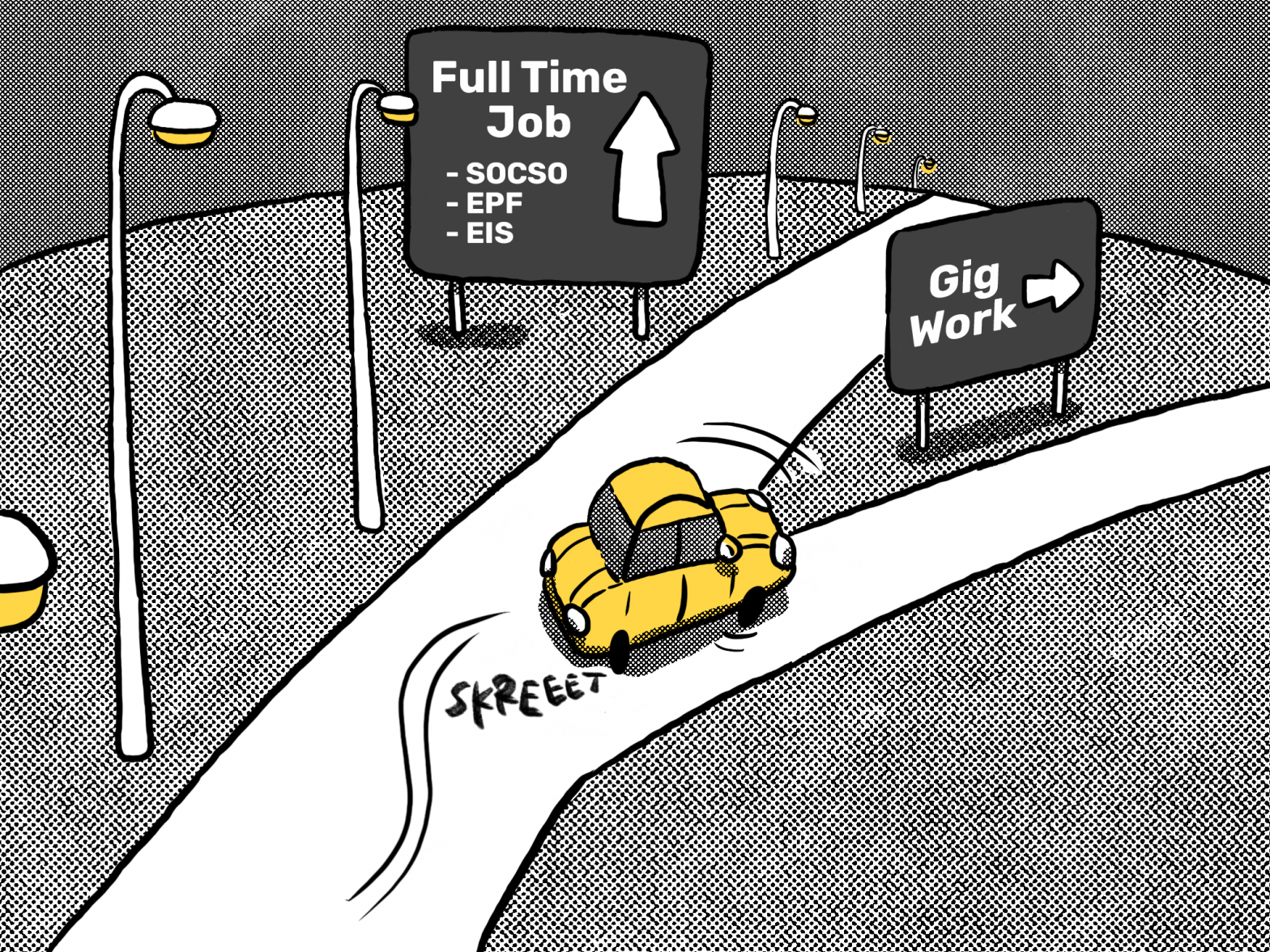
Over December 2019 and January 2020, we published sets of findings from our study of gig workers. The reality is sobering. Part 1 of our gig worker study showed that a significant proportion of gig workers, 58%, are effectively working on gigs full-time. For many, gig work is no longer just for side income.
Further, the notion of flexible and independent labour has concealed underlying risks. Part 2 of our study found that one in five gig workers do not have any form of social protection, i.e. no savings or insurance. Compared to formally employed workers, informal workers such as gig workers have always been under-protected in terms of social protection coverage but the extent of vulnerability revealed by our study is troubling.
Coverage of public concern about gig workers tends to revolve around certain stereotypes and contemporary worries such as unemployed graduates, hungry students and overqualified retirees. These stereotypes are also quite persistent amongst policymaking circles. However, our study shows that only 16% of ‘full-time’ gig workers have tertiary education. Youth aged 18-24 and elders aged 55 and above combined only make up 12% of respondents in our study.
Note: Tertiary education refers to Bachelor’s degree or higher level of qualification.
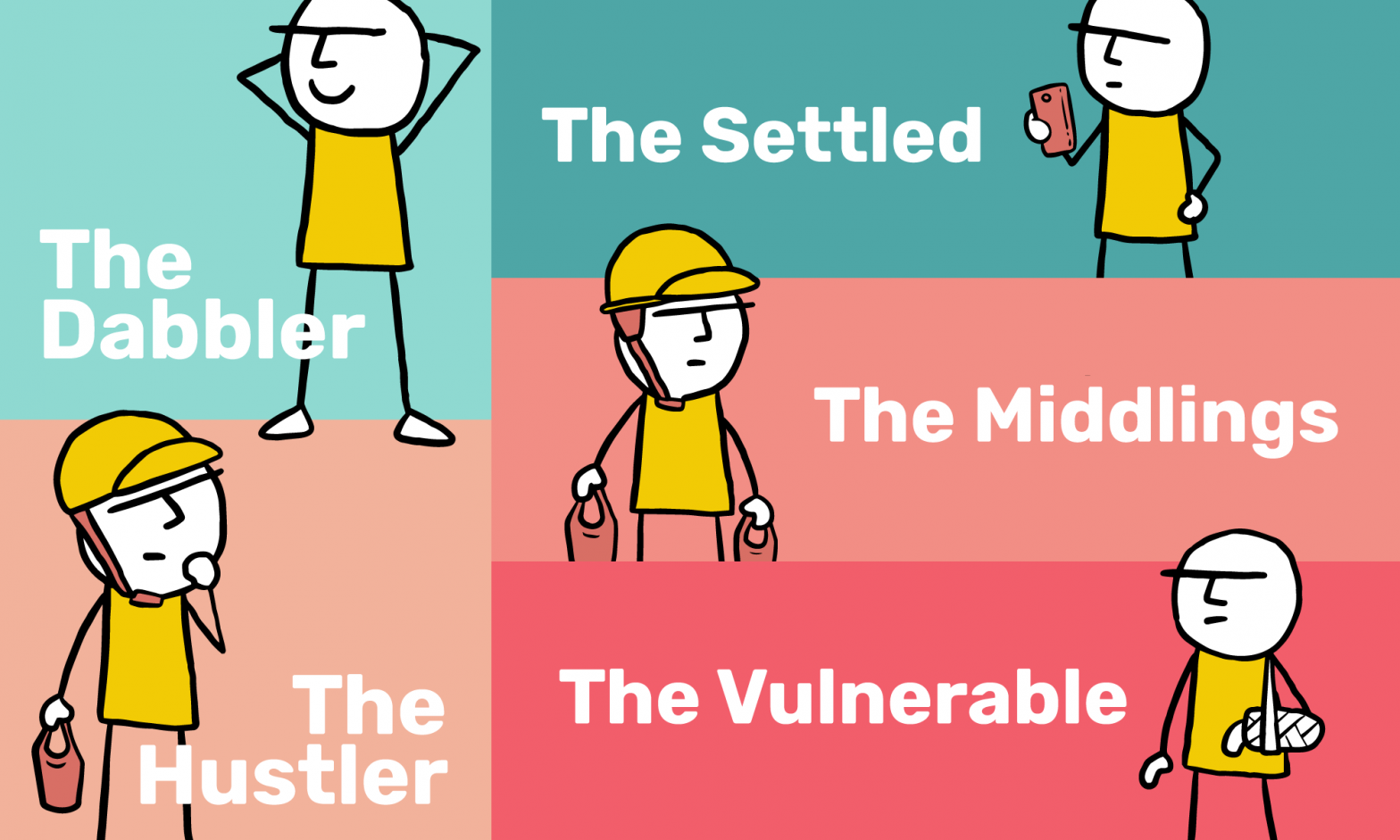
To debunk misleading stereotypes and to aid policymakers, we propose a typology of gig workers based on (a) hours worked and (b) the extent of social protection coverage. Based on these parameters, we’ve identified five types of gig workers.
1. ‘The Vulnerable’, which comprise 29% of respondents in our study, are those who work full-time hours or more but possess, at most, just one type of social protection scheme. For the majority of’ The Vulnerable’, the social protection they own is the Self-Employed Employment Injury Scheme (SEEIS) which is required by law. As the name denotes, ‘The Vulnerable’ are the gig workers at most risk, with minimal or no social protection at all.
2. ‘The Middlings’, comprising 24% of respondents, are slightly better than ‘The Vulnerable’. They work full-time hours or more, they take home similar amounts of net income from gig work but possess 2 to 3 forms of social protection.
3. ‘The Settled’, comprising 13% of respondents, are the least vulnerable relatively speaking. They work full-time hours or more, make slightly more in net gig income compared to ‘The Vulnerable’ and ‘The Middlings’ and have 4 to 5 forms of social protection.
It is worthwhile noting that the majority of these three types of ‘full-time’ gig workers are of prime working age, from 35 to 55 years old. The vast majority of them also have not had tertiary education.
The remaining two types of gig workers are those who work less than full-time hours:
4. ‘The Hustler’, comprising 17% of respondents, are those who work part-time hours and possess less than three types of social protection.
5. ‘The Dabbler’, also comprising 17% of respondents, are those who work part-time hours and have more than three types of social protection.
The majority of ‘The Hustler’ (63%) and ‘The Dabbler’ (61%) also do not have a degree, but there are more degree holders amongst these two groups compared to those who work full-time hours.
Figure 1: Typology of gig worker
Note: Number of social protection is defined as the total number of social protection the respondents indicated to have or participate in from the given list, which includes emergency savings, retirement/old-age savings, healthcare insurance, employment injury insurance, and unemployment insurance.
Our typology of gig worker aims to focus attention on those who are most at risk, namely groups like ‘The Vulnerable’ and ‘The Middlings’ who work full-time hours yet possess very little social protection coverage. But be it side hustle or main job, it is time to move away from certain stereotypes and assumptions.
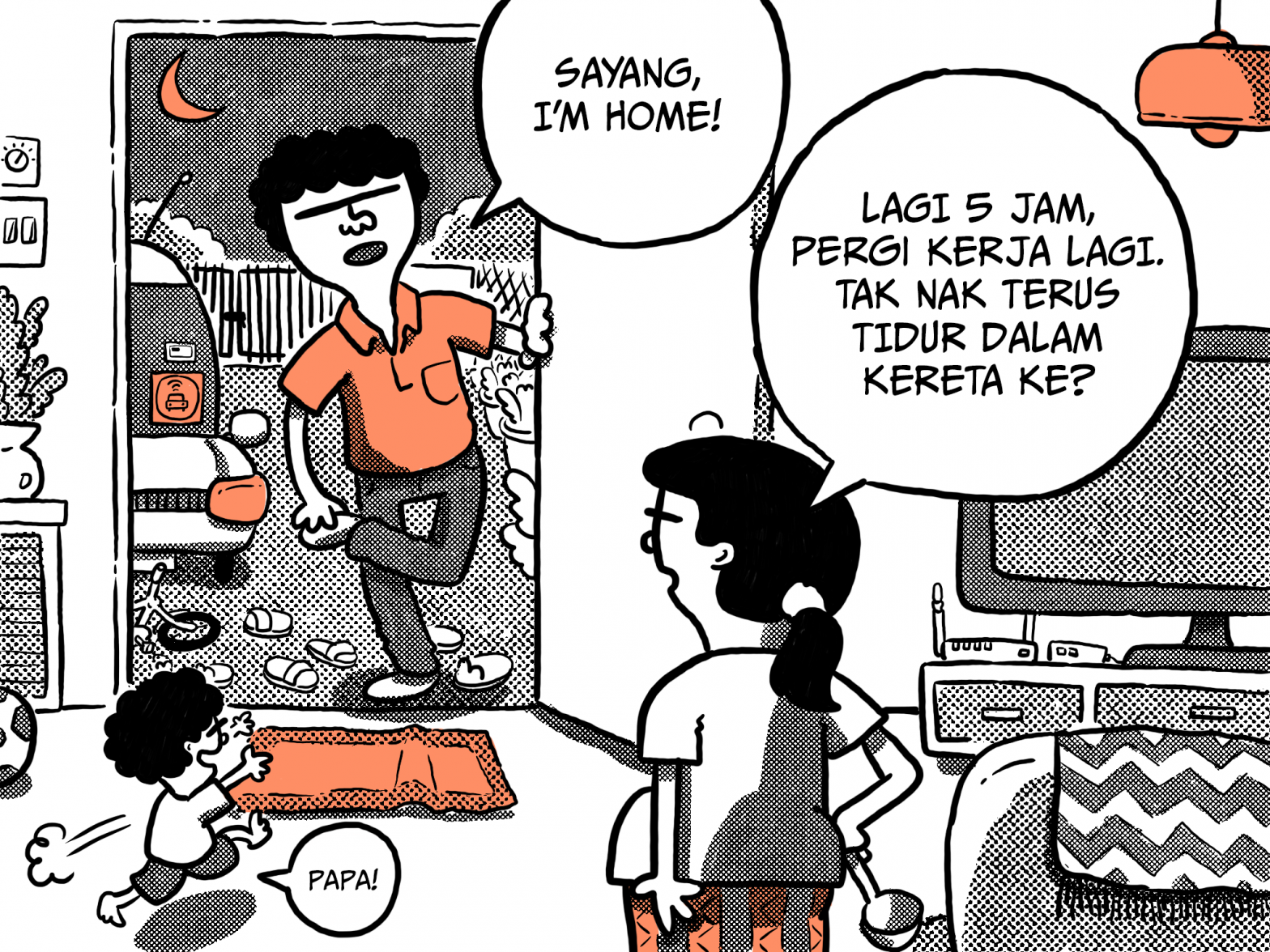
Gig work is not just a way to earn pocket money nor a job for unemployed graduates and restless retirees. Instead, attention must be paid on working-age adults with no tertiary degrees who are working on gigs beyond 8 hours a day, 6 to 7 days a week.
Part2 of our gig worker study, published earlier this year, presented the unsurprising findings that gig workers lack social protection. The survey of over 400 e-hailing and delivery drivers uncovered that 76% of respondents do not have unemployment insurance, 59% do not have retirement savings, 59% do not have emergency savings, 57% do not have healthcare insurance and 37% were not insured for workplace injury (Figure 1). In totality, one in five gig workers do not have any savings or insurance.
Figure 1: The possession or participation of gig workers in protection schemes
Our gig worker findings form one corner of a larger jigsaw puzzle picture of informal workers in Malaysia. A 2019 World Bank study affirmed that most informal workers in Malaysia are left out of the formal social protection system.
Note: This article will use the terms self-employed workers, own-account workers, informal workers and independent workers interchangeably.
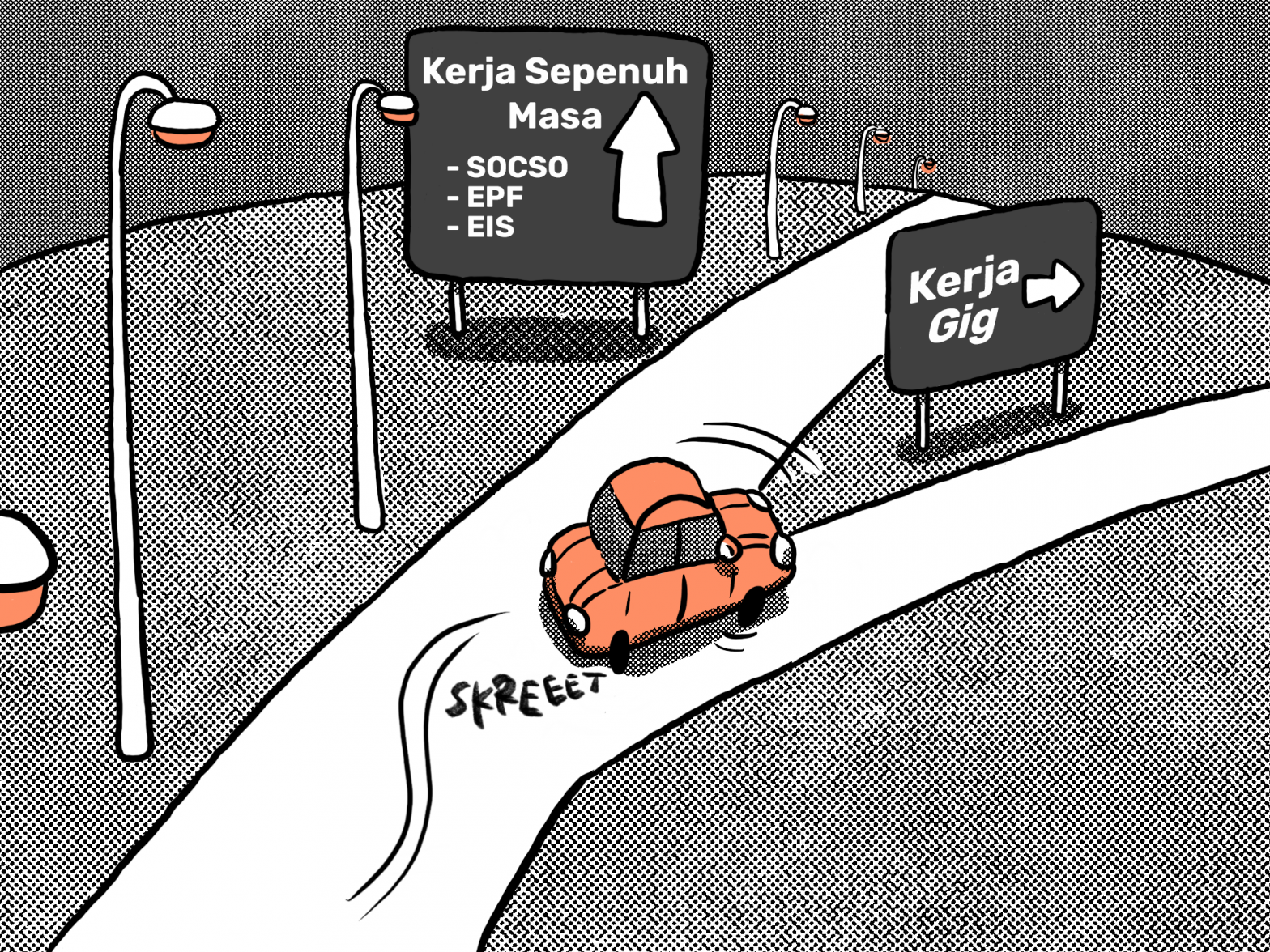
This is perhaps to be expected – Malaysia adopts an employment-based social protection strategy, where those with a formal job would be enrolled by their employers into social safety schemes such as the retirement savings scheme under EPF, workplace injury insurance under SOCSO and unemployment insurance or EIS also under SOCSO. Many employers also pay for or subsidise private healthcare insurance.
An employment-based approach to social protection coverage is adequate if the labour market is largely geared towards formal, full-time employment. However, Malaysian labour data shows that the share of informal employment or ‘own-account workers’ has increased from 17.4% in 2008 to 19.4% in 2018 (Figure 2).
Figure 2: Number of own-account worker and the percentage of the total employment by year
According to Khazanah Research Institute (KRI), the rising trend of informal workers in Malaysia could be a sign of an underlying transformation of the labour market. If more and more of the Malaysian labour market comprises ‘own-account workers’ who depend on freelance or ‘gig’ work for their livelihood, an employment-based approach will become increasingly insufficient in ensuring social protection coverage. Already today, only 38% of Malaysian workers participate in retirement scheme EPF or are covered by a public pension scheme; the remaining 62% who are not covered are mostly self-employed.
Where is the policy debate today?
In response to the increasing trend of labour market ‘informalisation’, governments across the world have started to study feasible regulatory changes towards protecting informal workers. In Malaysia, the government has introduced schemes such as the Self-Employed Employment Injury Scheme (SEEIS) and i-Saraan.
SEEIS is an employment or workplace injury insurance scheme similar to the one for full-time employees under SOCSO while i-Saraan is a voluntary retirement savings scheme. For i-Saraan, according to the EPF website, the government will contribute 15% or up to RM250 per person annually until 2022 (at the time of this writing, terms and conditions for this stated top-up was not stated).
i-Saraan is fully voluntary; one would have to actively sign up for the scheme and make monthly contributions from one’s business, freelancing or gig income. Meanwhile, the Self-Employment Social Security Act 2017 makes it mandatory for selected groups of self-employed workers to contribute to the SEEIS. The government has also recently extended the scope of coverage to four other informal sectors.
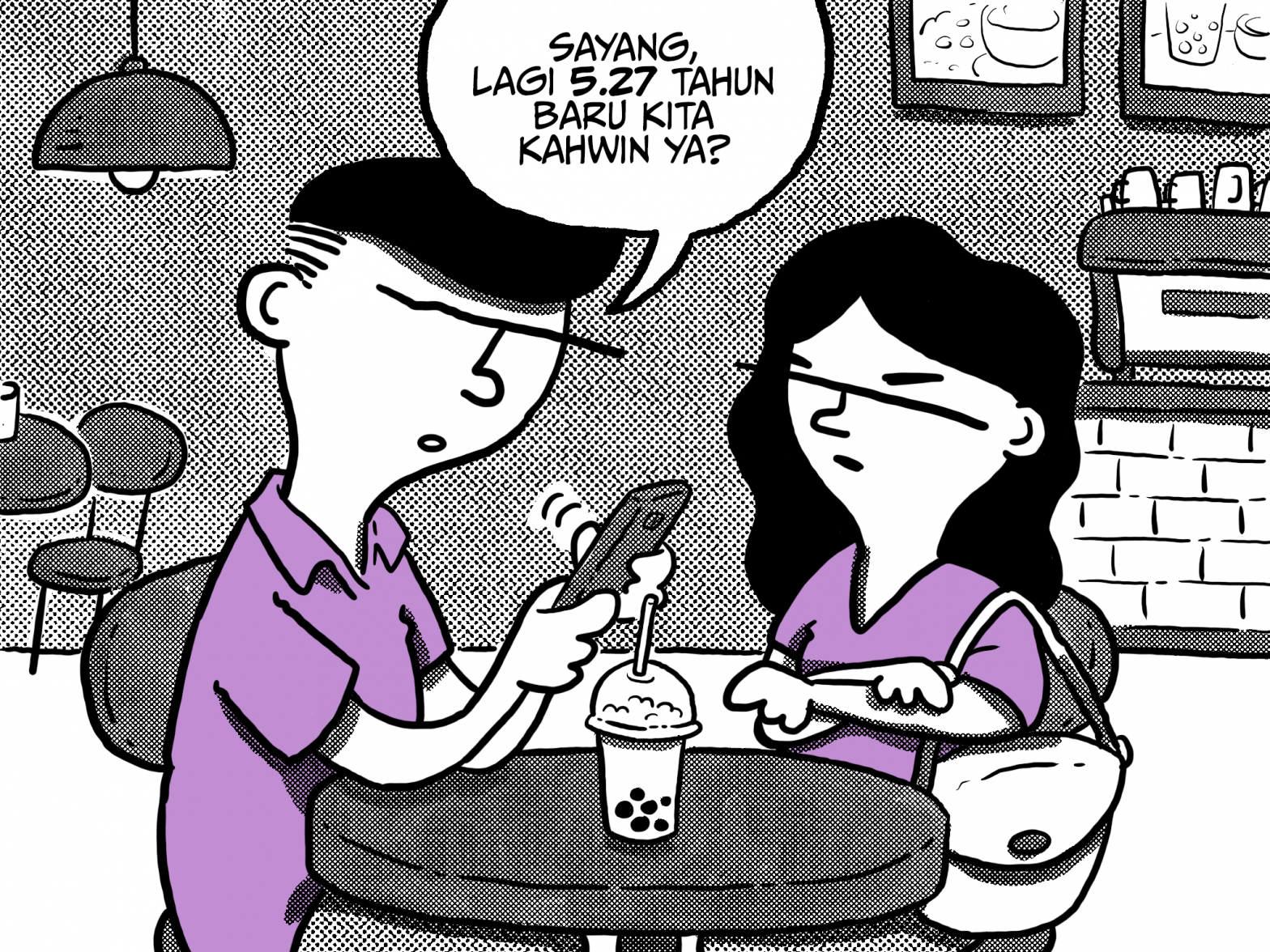
‘Mandatory’ here means that self-employed workers are required to join; they are not automatically enrolled into the scheme. This is a subtle but important point. Having a mandatory scheme without securing enrolment means that the onus is on the worker to not only enrol in the scheme but also to actively pay into the scheme each month. And given human nature, the majority will not do this – too much hassle for an unclear payoff.
Unless enforcement is very strict, takeup of such a scheme will be low. And so it is unsurprising that although SEEIS is ‘mandatory’, only 18% of an estimated 250,000 drivers who come under the scheme are registered. The enforcement required in achieving even this amount of takeup appears to be high, involving spot check visits, warnings and court action.
It is time that we take a serious look at automatic enrolment and automatic deductions. Implementing this approach, with an opt-out option, is a well-known behavioural strategy to ensure participation in social security plans across the world. A study by Clark and Young at Vanguard found that participation rates of those under an automatic enrolment saving and investment plan is nearly double of those under voluntary enrolment. And automatic enrolment-cum-deductions works particularly well for gig platforms which (a) already have a data infrastructure (b) pay out earnings to thousands of informal workers.
In our stakeholder engagement sessions, an e-hailing group speculated that not many drivers are aware of SEEIS or are confusing it with ‘e-hailing insurance’ (which is largely motor accident insurance with passenger coverage). We agree that clear and frequent communication is necessary but we argue here that a bigger issue is scheme design.
Our gig worker study shows that a significant majority of respondents are willing to let gig platforms deduct from their gig income for various types of social protection schemes. How do we reconcile this with the low takeup of schemes like i-Saraan and even the ‘mandatory’ SEEIS? It could be the case that workers, informal or otherwise, prefer regular automatic deductions of relatively painless amounts, rather than actively paying out a painful monthly lump sum from their take-home pay.
Voluntary, but together
Can voluntary social protection schemes work? In other places, some informal worker groups are attempting to band together to protect themselves. US-based Freelancers Union, for example, has partnered with insurance companies to set up Trupo which allows freelancer members to purchase personal accident and dental insurance as a collective group, making insurance premiums cheaper. Similarly, the New York Taxi Workers Alliance in the United States takes advantage of their union size to get discounted rates on legal, financial and healthcare services for their members.
Closer to home, Malaysia e-Hailing Drivers Association (MeHDA) has leveraged its organisation size to get selected workshops to provide better rates for vehicle maintenance services. MeHDA is also currently negotiating with a car manufacturer to offer better car rental rates for e-hailing drivers. Not quite social protection, but perhaps these measures will extend to savings or insurance schemes for association members as gig working matures in Malaysia.
We may also see the introduction of more products and services to cater for informal workers’ social protection needs and to fit the fluid nature of informal work. Gigacover in Singapore, an insurtech startup underwritten by Etiqa Insurance, offers workplace injury and illness insurance to self-employed workers. In the United States, Thimble provides on-demand periodical employment injury and liability insurance to freelancers.
To be fair, some gig platforms are also trying to play their part. Leading up to the implementation of Assembly Bill 5 in California, Uber, Lyft and other gig platforms put together a USD100 million fund and promised worker protections including a ‘net earnings guarantee’ for driver-partners who record 20 hours or more in booked rides a week. Though not a gig platform, marketplace Etsy has been at the forefront in advocating better welfare for independent workers, partnering with BlackRock to help their sellers build emergency savings.
Meanwhile, in Malaysia, Grab has partnered with EPF to promote the voluntary retirement savings program i-Saraan by offering to top up an extra 5% (to a maximum of RM80 a year) on top of partner-drivers’ contributions into the scheme. According to industry observers we’ve spoken to however, the takeup for this initiative is extremely low.
Voluntary schemes, be it by organised worker groups or gig platforms, fill a missing niche. But since coverage still depends on the worker’s initiative and willpower to join up, it will arguably never reach meaningful levels. Not only do we need affordable schemes, we need an approach that works with and not against our human nature.
Auto-enrol and auto-deduct
The voluntary nature of social protection schemes limits its effectiveness. Even programmes that are mandatory still requires workers to take the extra step of registering and actively paying into the scheme.
To enhance the effectiveness of our social protection system, we could model the French General Social Security Scheme. The scheme automatically enrols those aged 16 and above by providing them with a social security number, thereby minimise coverage gaps (those under the age of 16 come under their parent or guardian’s accounts). The protection scheme covers healthcare, workplace injury, retirement and family benefits.
What about deductions? Admittedly, this works best via ‘worker portals’ such as gig platforms. Small amounts of a pre-set percentage could be automatically deducted from daily or weekly earnings before it is paid out to the worker, reducing the risk of avoidance or procrastination.
The time to move the conversation is now. We argue that Malaysia is at a tipping point; informalisation of the labour market will continue to increase and so we need to determine effective policy approaches towards ensuring the social protection of informal workers. While we applaud voluntary and innovative private protection schemes, these should supplement, but not be the main basis, of informal worker social protection.
Automatic enrolment and, as far as possible, automatic deductions is the way to go.
Apakah kedudukan semasa sektor perikanan di Malaysia?
Tahukah anda bahawa Malaysia adalah antara sepuluh negara pemakan ikan terbesar di dunia? Sejak tahun 2010, Malaysia juga telah mencapai lebihan tahap sara diri bekalan ikan. Ini bermakna, jumlah hasil tangkapan ikan di Malaysia mampu memenuhi keperluan rakyat Malaysia. Namun begitu, Malaysia masih lagi perlu bergantung kepada bekalan ikan import dari negara lain seperti Thailand, China dan Vietnam bagi beberapa spesis yang mendapat permintaan tinggi dari kalangan penduduk tempatan.
Sektor perikanan di Malaysia menyumbang sebanyak 0.9% kepada Keluaran Dalam Negara Kasar (KDNK) Malaysia bagi tahun 2018 atau bersamaan RM12.39 bilion (2017: RM12.33 bilion) (dimana 0.6% adalah dari sektor perikanan laut). Walaupun sumbangan sektor perikanan kepada KDNK kelihatan kecil, namun sektor ini merupakan nadi penting pekerjaan dan pendapatan bagi lebih 100,000 orang di Malaysia, terutamanya perikanan laut.
Berapakah jumlah nelayan di Malaysia?
Berdasarkan statistik yang dikeluarkan oleh Jabatan Perikanan Malaysia (DOF), jumlah keseluruhan nelayan dan awak-awak (pekerja di atas vesel nelayan) di Malaysia pada tahun 2017 adalah sebanyak 130,645 orang, yang mana 94,568 orang adalah nelayan tempatan manakala 36,077 orang lagi adalah nelayan warganegara asing.
Tidak semua daripada mereka ini merupakan nelayan sepenuh masa, atau menjadikan aktiviti tangkapan ikan sebagai sumber pendapatan utama mereka. Anggaran jumlah nelayan sepenuh masa di Malaysia sekitar 37,000 orang (berdasarkan penerima Elaun Sara Hidup Nelayan (ESHN) yang memerlukan syarat nelayan sepenuh masa dan perlu turun ke laut minimum 120 hari setahun).
Nelayan yang beroperasi dikategorikan mengikut jenis vesel dan zon tangkapan yang dibenarkan. Terdapat empat kategori nelayan iaitu nelayan Zon A iaitu nelayan pesisir pantai, nelayan Zon B, nelayan Zon C dan nelayan Zon C2.
Jarak operasi vesel ini adalah seperti berikut:
Mengikut Laporan Risikan Pasaran Tahunan 2017 yang dikeluarkan oleh LKIM, taburan vesel yang beroperasi di seluruh negara adalah sebanyak 34,670. Jumlah vesel zon A (petrol) adalah 23,918 buah, vesel zon A (diesel) berjumlah 4,763 buah, zon B (3,327 buah), zon C (2,250 buah) dan zon C2 (412 buah).
Taburan vesel mengikut negeri pula adalah seperti berikut:
Berapakah jumlah hasil pendaratan dan pendapatan nelayan?
Pendapatan nelayan berkadar terus dengan hasil pendaratan yang mereka perolehi. Menurut statistik terkini dari DOF, jumlah pendaratan ikan pada tahun 2017 adalah sebanyak 1.465 juta tan metrik (TM) iaitu sebanyak 723.55 ribu TM di kawasan Pantai Barat, 401.9 ribu TM di Pantai Timur, 158.9 ribu TM di Sarawak, 162.3 ribu di Sabah dan 18.4 ribu di W.P Labuan.
Tidak semua pendaratan ini diisytiharkan kepada Lembaga Kemajuan Ikan Malaysia (LKIM). Bagi jumlah pendaratan ikan yang diisytiharkan kepada LKIM pula adalah sebanyak 851,217 tan metrik (TM) dengan nilai RM2.52 bilion sepanjang tahun 2017. Pecahan jumlah pendaratan mengikut zon adalah seperti carta pai di bawah:
Berdasarkan jumlah pengisytiharan ini, vesel Zon A (Petrol) menerima purata pendapatan bulanan sebanyak RM2,346 manakalan vesel Zon A (Diesel) adalah RM3,148. Bagi vesel Zon B pula, pendapatan bulanan mereka adalah RM14,026, Zon C (RM33,960) dan Zon C2 (RM38,388).
Pendaratan mengikut spesis pula melihatkan ikan baja membentuk 14.5% daripada keseluruhan pendaratan, diikuti ikan gelama (4.9%) dan ikan conor (4.8%). Pendaratan ikan baja yang banyak tidak membantu industri perikanan negara (perbincangan selanjutnya di segmen cabaran nelayan di bawah).
Ikan baja adalah ikan kecil atau anak ikan (belum mencapai saiz boleh dijual) yang tidak mempunyai nilai walaupun adalah spesis bernilai tinggi dan komersil.
Bagaimanakah kerajaan membantu golongan nelayan?
Kerajaan telah memperkenalkan beberapa program bantuan secara terus bagi membantu meningkatkan pendapatan para nelayan iaitu:
Selain daripada bantuan secara terus kepada nelayan, kerajaan juga telah memperkenalkan beberapa bentuk bantuan serta program lain antaranya;
Pinjaman Dana Nelayan bagi tujuan penambahbaikan kapasiti dan sosioekonomi nelayan,
Skim Insurans Nelayan bagi tujuan perlindungan daripada kejadian yang tidak diingini atau kemalangan melibatkan nelayan, serta;
Skim Bantuan Bencana Alam Dan Kebajikan Nelayan yang bertujuan memberi bantuan dan sumbangan segera dalam bentuk tunai yang menghadapi musibah disebabkan bencana alam atau kejadian luar jangka seperti kebakaran.
Walaupun pelbagai bentuk bantuan serta insentif kerajaan disalurkan kepada nelayan, namun golongan nelayan masih lagi sukar untuk keluar daripada masalah kesempitan hidup. Secara tidak langsung, perkara ini memberi bayangan bahawa masalah kehidupan yang dihadapi oleh nelayan adalah sangat kompleks dan begitu rumit untuk dirungkaikan.
Apakah cabaran yang dihadapi oleh nelayan?
Nelayan terutamanya nelayan zon A seringkali dikaitkan sebagai kumpulan masyarakat yang menghadapi kesempitan hidup disebabkan ketidak tentuan pendapatan mereka. Pendapatan nelayan ditentukan oleh jumlah hasil tangkapan serta keadaan naik turun harga pasaran.
Pencerobohan nelayan asing dan zon larangan
Ketua Pengarah Jabatan Perikanan Malaysia pada bulan Oktober 2018 telah menyatakan bahawa sejumlah 128 buah bot nelayan asing telah ditahan sepanjang tahun 2019. Disebabkan pencerobohan nelayan asing ini, Malaysia dilaporkan kehilangan hasil berjumlah RM5 bilion setahun.
Pencerobohan nelayan haram sama ada nelayan asing mahupun vesel yang melanggar peraturan zon larangan ini telah menjejaskan pendapatan nelayan tempatan terutamanya nelayan kecil kerana vesel yang digunakan oleh nelayan haram ini mempunyai kapasiti yang besar serta menggunakan peralatan tangkapan yang tidak mengikut spesifikasi yang dibenarkan.
Penggunaan pukat tunda
Penggunaan pukat tunda adalah dibenarkan dan telah menyumbang kepada 46% daripada jumlah pendaratan ikan di Malaysia. Walau bagaimanapun, penggunaan pukat tunda sama ada di kawasan yang dibenarkan atau dilarang akan menyebabkan kesemua hidupan laut yang dilalui pukat berkenaan masuk ke dalam pukat tersebut. Ini dibuktikan apabila 60% daripada keseluruhan hasil yang ditangkap menerusi pukat tunda adalah ikan baja.Tangkapan ikan baja yang belum mencapai saiz matang ini boleh menjejaskan stok bekalan ikan pada masa hadapan.
Penguatkuasaan yang tidak cekap juga menyaksikan banyak vesel yang menggunakan pukat tunda memasuki zon larangan yang menjejaskan hasil tangkapan nelayan kecil.
Arus pembangunan
Kegiatan mengorek pasir dan penambakan pesisir pantai bagi tujuan pembangunan menambah masalah kepada pendapatan nelayan. Aktiviti pembangunan yang tidak mampan ini akan menyebabkan ekosistem lautan rosak dan tidak lagi menjadi kawasan tumpuan hidupan laut.
Kehadiran orang tengah menjadi dilema kepada para nelayan terutamanya nelayan kecil memandangkan orang tengah seringkali memanipulasi harga pembelian. Sebagai contoh, orang tengah akan menawarkan harga pembelian secara terus yang lebih tinggi kepada nelayan berbanding harga yang ditawarkan oleh peraih berlesen yang menyebabkan mereka tidak mengisytiharkan hasil yang didaratkan kepada LKIM.
Masalah mula wujud apabila nelayan yang tidak mengisytiharkan hasil tangkapan kepada LKIM ini boleh hilang kelayakan bagi mendapatkan bantuan atau insentif yang disediakan oleh kerajaan seperti elaun sara hidup dan insentif hasil tangkapan.
Soalan Dari Peminat Dasar Apakah langkah-langkah yang munasabah untuk mengatasi masalah-masalah yang dihadapi oleh nelayan, terutama nelayan Zon A?
Bagi kawasan-kawasan di mana hasil pendaratan / tangkapan adalah rendah, bagaimanakah kerajaan boleh membantu para nelayan untuk meningkatkan hasil pendapatan mereka? Adakah memadai dengan elaun sara hidup?
Dalam Bahagian 1 kaji selidik pekerja gig yang kami terbitkan akhir tahun lalu, kami meneliti komitmen masa pekerja gig terhadap pekerjaan gig mereka bagi memahami peranan dan kepentingan pekerjaan gig hari ini. Hasilnya, kami menemui dua realiti: hampir 50% daripada responden kajian menganggap pekerjaan gig sebagai kerja sampingan, manakala lebih 50% daripada responden melihat atau menjadikan pekerjaan gig sebagai pekerjaan utama. Ternyata, bagi separuh pekerja gig dalam kajian kami, pekerjaan gig bukan sekadar pekerjaan sambilan tetapi sumber mata pencarian utama.
Namun, pekerja gig kekurangan akses kepada perlindungan sosial. Sebagi contoh, caruman KWSP diwajibkan hanya untuk pekerja formal atau rasmi. Dalam dunia ekonomi gig, pekerja gig diistilah sebagai ‘rakan’ atau kontraktor bebas dan bukan pekerja.
Namun, keperluan perlindungan sosial bagi pekerja gig akan menjadi semakin diperlukan dengan pertambahan pekerjaan gig dan platform gig – termasuk yang terbaru sekali iaitu perkhidmatan e-hailing motosikal.
Kerajaan kini sedang merangka undang-undang baharu bagi menakrifkan semula status pekerjaan pekerja gig supaya dapat melindungi kebajikan mereka. Seiring dengan itu, kami melancarkan kajian yang cuba memahami kadar penyertaan pekerja gig dalam skim-skim perlindungan sosial dan tahap permintaan mereka terhadap skim-skim tersebut.
Untuk maklumat lanjut tentang kaedah kajian, sila rujuk Bahagian 1.
Tahap perlindungan bagi menghadapi kesukaran kewangan
Adakah pekerja gig mempunyai simpanan bagi tujuan kecemasan atau persaraan? Adakah mereka mempunyai insuran yang secukupnya?
Berdasarkan kaji selidik kami, 59% responden tidak mempunyai simpanan untuk kecemasan dan 59% tidak mempunyai tabungan untuk umur tua atau persaraan – satu jumlah yang cukup signifikan. Daripada segi perlindungan insurans, 76% daripada pekerja gig tidak mempunyai insurans kehilangan pekerjaan, 57% tidak mempunyai insurans kesihatan peribadi dan 37%* tidak mempunyai insurans kecederaan atau kemalangan di tempat kerja (Rajah 1). Lebih membimbangkan, 22% atau hampir satu per lima daripada responden tidak mempunyai apa-apa bentuk simpanan atau perlindungan sosial.
*Satu jumlah yang agak rendah berbanding yang lain, mungkin kerana pemandu e-hailing diwajibkan mempunyai insurans kemalangan atau kecederaan di tempat kerja sebagai syarat mendapatkan lesen PSV.
Rajah 1: Penyertaan dalam skim perlindungan sosial
Dalam Bahagian 1 kaji selidik ini, kami mengkategorikan pekerja gig sebagai ‘sepenuh masa’ ‘separuh masa’ atau ‘sambilan’ berdasarkan jumlah masa bekerja mereka. Merujuk kepada kategori-kategori ini, kami mendapati hanya 44% daripada pekerja gig ‘sepenuh masa’ dan 42% daripada pekerja gig ‘separuh masa’ mempunyai perlindungan sosial yang lengkap*. 60% daripada pekerja gig ‘sambilan’ – peratusan yang tinggi – mempunyai perlindungan sosial lengkap (Rajah 2) kerana ramai dalam kategori ini mempunyai pekerjaan tetap dengan faedah-faedah pekerja rasmi yang berkaitan.
*Perlindungan sosial lengkap ditakrifkan sebagai memiliki tabungan kecemasan, tabungan persaraan, insuran kesihatan, insuran kehilangan pekerjaan, dan insuran kemalangan atau kecederaan di tempat kerja.
Rajah 2: Perlindungan sosial berdasarkan jenis pekerja gig
Apakah faedah yang pekerja gig mahukan?
Apabila diminta untuk memilih di antara senarai faedah-faedah pekerja, faedah yang menjadi pilihan ramai adalah subsidi kos menjalankan pekerjaan gig seperti petrol dan subsidi telefon. Gaji minima juga pilihan utama (Rajah 3). Tidak menghairankan, faedah yang mampu meningkatkan jumlah gaji bersih lebih mendapat permintaan berbanding faedah yang memberikan perlindungan untuk masa hadapan.
Simpanan persaraan dan insurans kemalangan di tempat kerja menjadi pilihan yang kedua. Peluang atau latihan bagi kemajuan kerjaya adalah yang paling kurang diminati, mencerminkan harapan yang tipis terhadap perkembangan kerjaya dalam pekerjaan gig.
Rajah 3: Jenis perlindungan sosial dan manfaat yang diingini
Rela pendapatan dipotong supaya dapat perlindungan sosial?
Sedikit mengejutkan, kami dapati bahawa majoriti daripada pekerja gig dalam kajian bersedia jika platform gig mereka melakukan potongan ke atas pendapatan sebagai caruman untuk pelbagai jenis perlindungan sosial (Rajah 4).
Lebih daripada dua pertiga responden menjawab bahawa mereka bersedia* pendapatan mereka dipotong untuk membayar insurans kecederaan di tempat kerja (77%), simpanan persaraan (72%) dan insurans kehilangan pekerjaan (69%). Majoriti yang kecil, namun lebih daripada separuh yang dikaji bersedia untuk dipotong pendapatan demi simpanan kecemasan (66%) dan insurans kesihatan (64%) (Rajah 4).
*Responden yang ‘bersedia’ adalah mereka yang menjawab ‘ya’ atau ‘bergantung kepada jumlah’ kepada soalan yang diajukan (Rajah 4).
Rajah 4: Kesediaan pendapatan dipotong demi perlindungan sosial
Berapakah jumlah potongan yang disanggupkan?
Kami menerima respons yang pelbagai terhadap soalan terbuka ini. Secara umumnya, majoriti daripada responden iaitu 64% bersedia mengasingkan RM200 ke bawah untuk manfaat insurans dan simpanan. Jumlah pertengahan atau median yang sanggup disumbang atau dicarumkan adalah RM100 sebulan. 15% daripada pekerja gig sanggup mengasingkan tidak lebih daripada RM25, 19% sanggup memotong RM25 – RM99 sementara 30% sanggup memotong antara RM100 – RM199. Sejumlah kecil tapi tetap signifikan, sebanyak 37%, sanggup mengasingkan RM200 ke atas untuk simpanan dan insurans (Rajah 5).
Rajah 5: Jumlah yang sanggup dipotong pekerja gig setiap bulan untuk pelbagai faedah dan perlindungan sosial
Wajarkah platform gig turut mencarum?
Menurut sebilangan besar responden: ya. Kajian kami mendapati sebahagian besar daripada pekerja gig mahukan platform gig mereka untuk mencarum kepada sebahagian daripada perlindungan sosial buat mereka yang bekerja jumlah masa menyamai pekerja sepenuh masa (Rajah 6).
Adakah jawapan ini diberi berikutan tanggapan bahawa platform gig adalah majikan tidak rasmi? Oleh kerana platform gig mengawal penetapan kadar dan juga penggantungan atau pemberhentian pekerja gig, platform gig mungkin dilihat sebagai majikan yang agak berkuasa dan bukan ‘rakan perniagaan’ semata-mata.
Jumlah tanggungan di rumah<strong
Sebagai penutup, kami bertanya responden kajian tentang bilangan tanggungan mereka. Lebih daripada 60% pekerja gig dalam kajian kami mempunyai tiga atau lebih orang tanggungan (Rajah 7).
Rajah 7: Bilangan tanggungan berdasarkan jenis pekerja gig
Halatuju Dasar Masa Kini
Hari ini, perlindungan sosial pekerja gig adalah secara sukarela, seperti skim simpanan persaraan sukarela i-Saraan. Satu-satunya bentuk perlindungan sosial yang diwajibkan adalah insurans kemalangan atau kecederaan di tempat kerja bagi pemandu e-hailing sebagai sebahagian syarat memiliki lesen PSV.
Berdasarkan situasi semasa ini, kerajaan telah menubuhkan satu jawatankuasa khas untuk mencari penyelesaian jangka panjang kepada isu-isu berkaitan ekonomi gig. Kerajaan juga bercadang untuk mengetengahkan perlindungan pekerja untuk pekerja gig dalam Rancangan Malaysia Ke-12 (2021-2025) bagi memastikan perlindungan sosial yang lebih baik.
Pertimbangan Dasar
Tahun ini bakal menyaksikan pengenalan perkhidmatan tunggang e-hailing atau perkongsian motosikal menerusi platform Dego Ride, Grab Bike dan Gojek. Susulan itu, penganalisis menjangkakan penyertaan ribuan pekerja gig baru.
Walaupun kami ragui keupayaan pekerjaan gig untuk meningkatkan mobiliti sosial, tidak dapat dinafikan bahawa pekerjaan gig membolehkan penyaraan hidup, terutamanya bagi mereka yang kurang kelulusan akademik dan pilihan kerjaya. Walaubagaimanapun, seperti ditunjukkan hasil kaji selidik kami, pekerjaan gig tidak memudahkan penyertaan dalam skim-skim perlindungan sosial meskipun adanya kesanggupan di kalangan pekerja gig untuk mengenepikan sebahagian daripada pendapatan mereka sebagai simpanan atau insurans.
Justeru, apakah langkah-langkah yang perlu diambil? Pada pandangan kami, skim sukarela bukanlah langkah yang paling berkesan bagi memastikan pekerja gig mempunyai perlindungan sosial.
Usaha meningkatkan tahap celik kewangan adalah baik. Namun, lumrah manusia adalah untuk cenderung kepada kepuasan sekarang, sekiranya diberikan pilihan. Oleh itu, penyertaan secara automatis dalam skim potongan gaji (dengan pilihan untuk opt out bagi mereka yang sudah memiliki skim perlindungan sendiri) adalah lebih efektif. Tambahan pula, sistem penyertaan secara automatis lebih mudah dilaksanakan menerusi platform gig, dengan infrastruktur data yang tersedia.
Namun, persoalan yang lebih besar adalah sama ada platform gig dan perniagaan lain yang menggaji ramai pekerja tidak rasmi, perlu menyumbang kepada perlindungan sosial ‘pekerja’ merangkap ‘rakan kongsi’ mereka?
Bagi menjamin prinsip keadilan dan untuk mengelakkan eksploitasi buruh, kami berpendapat bahawa pekerja gig yang bekerja sepenuh masa (atau lebih) pada setiap minggu wajar menerima caruman perlindungan sosial daripada platform gig mereka.
Mengira jumlah caruman mungkin rumit memandangkan siapa yang bekerja secara ‘sepenuh masa’ bertukar-tukar sepanjang masa. Namun, ia tidak mustahil. Dengan data yang sudah sedia dikumpul oleh platform gig, jumlah caruman boleh bersifat dinamik, dikira berdasarkan purata jam bekerja setiap minggu atau bulan melangkaui waktu minima yang dipersetujui serta syarat-syarat lain.
Undang-undang baharu berkaitan pekerja gig yang sedang dirangka boleh mengungkapkan takrifan baharu ini, yang mencerminkan pasaran buruh yang semakin dibanjiri pekerja gig, pekerja kontrak dan pekerja sambilan. Lanskap baharu ini turut menuntut perubahan dasar perlindungan sosial.
Sistem hari ini bergantung kepada majikan sebagai satu saluran agihan perlindungan sosial. Anda berkemungkinan besar mempunyai caruman KWSP dan PERKESO jika anda didaftarkan oleh sebuah syarikat sebagai pekerja mereka. Malaysia perlu beralih kepada perlindungan sosial secara individu, yang dibuat dari peringkat awal umur lagi, tanpa mengira status pekerjaan. Akaun perlindungan individu begini bukan sahaja memudahkan cara potongan atau caruman kepada pelan simpanan dan insurans apabila (atau jika) seseorang itu mula bekerja, ia juga akan membantu kerajaan untuk menyalurkan bantuan secara lebih tepat dan memperbaiki kutipan cukai.
Kesimpulan
Kebangkitan ekonomi gig merubah pemahaman konvensional tentang pekerjaan dan bentuk sumbangan atau bayaran majikan kepada pekerja ‘tidak rasmi’. Kelebihan pekerjaan gig seperti masa bekerja yang fleksibel juga bermakna ketidaktentuan pekerjaan dan pendapatan yang tidak stabil.
Tidak sukar kita bayangkan masa depan di mana kebanyakan orang memilih untuk bekerja secara tidak rasmi atau secara kontrak. Pihak yang menggajikan mereka wajar mempunyai tanggungjawab yang jelas dan adil terhadap kebajikan pekerja bagi mencerminkan sumbangan tenaga. Pada masa yang sama, pekerja-pekerja juga perlu disokong dalam menguruskan keperluan kewangan masa kini dan masa depan mereka dengan cara yang mengiktiraf lumrah dan tabiat manusia.
Sejak awal tahun 2010, rakyat Malaysia mula diperkenalkan dengan syarikat perintis e-hailing MyTeksi (kini dikenali sebagai Grab) dan Uber. Perkhidmatan yang ditawarkan platform-platform ini kini tidak asing lagi bagi masyarakat kota. Tahun demi tahun, platform gig dan ekonomi gig semakin berkembang, menjadi sumber pendapatan penting bagi kira-kira 250,000 pekerja gig di seluruh negara (anggaran industri).
Tentu ramai yang masih ingat bagaimana pekerjaan gig di awal kemunculannya hanya dilihat sebagai kerja sampingan atau cara menjana duit poket. Tapi kini, lebih ramai rakyat ‘menyahut seruan dua kerja’ (atau lebih) dengan memanfaatkan peluang yang ditawarkan melalui pekerjaan gig bagi memenuhi keperluan sehari-hari. Bagi yang terlibat, sejauh manakah mereka bergantung kepada pekerjaan gig ? Kami bertanyakan soalan ini dan soalan-soalan lain dalam satu kaji selidik bertujuan untuk memahami kepentingan pekerjaan gig kepada mereka yang melaksanakannya.
Metodologi Kajian
Selama sebulan, antara Oktober 15, 2019 hingga November 16, 2019, The Centre telah menjalankan kaji selidik di kalangan pemandu e-hailing dan pemandu penghantaran, meliputi sebahagian besar pekerja gig. Istilah pekerja gig dalam konteks kajian ini merujuk kepada individu yang menjalankan perkhidmatan berdasarkan permintaan (on-demand services) melalui platform gig digital seperti Grab atau Foodpanda.
Kaji selidik ini diadaptasi dari kajian NatCen (2018), antara lain meliputi pertanyaan tentang tempoh waktu bekerja, sumbangan pendapatan dari pekerjaan gig dan penglibatan dalam skim perlindungan sosial. Kaji selidik ini diedarkan dalam bentuk digital dan salinan cetak secara rawak melalui jaringan peer-to-peer pekerja gig seperti Malaysia E-hailing Drivers Association (MeHDA) dan laman-laman media sosial yang banyak dianggotai oleh pekerja gig.
Setelah mengenepikan responden yang tidak memenuhi kriteria pensampelan, sampel akhir bagi kaji selidik ini berjumlah 411 dari 464 respons yang diterima. Dengan jumlah anggaran populasi pekerja gig antara 250,000 hingga 300,000, ukuran sampel tersebut memberikan aras keyakinan (confidence level) lebih 90% bahawa hasil kajian ini dapat mewakili realiti hari ini.
74% dari responden menawarkan perkhidmatan e-hailing, sementara 26% menawarkan perkhidmatan penghantaran. 94% dari responden adalah lelaki. Dari segi usia, kebanyakan responden terdiri dari golongan belia dan pekerja muda, dengan 6% berusia di antara 18-24; 32% antara 25 – 34 tahun; 36% antara 35 – 44 tahun, 21% antara 45 – 54 tahun dan 6% antara 55 ke atas.
Nota peringatan: Oleh kerana tiada data rasmi merangkumi jumlah sebenar pekerja gig di Malaysia, kaji selidik ini tidak harus diambil sebagai mewakili setiap strata. Pekerja gig dengan kadar celik membaca atau celik digital yang rendah juga mungkin kurang diwakili.
Akhir sekali, seperti kelaziman dalam mana-mana kaji selidik, terdapat bukti dimana responden didapati kurang atau terlebih memberi maklum balas bagi soalan tertentu. Outlier yang dapat dikenalpasti tidak dimasukkan dalam hasil kajian. Dalam kes-kes seperti ini, saiz sampel akhir tetap memberikan tingkat keyakinan lebih 90%.
Kaji selidik ini dibahagikan kepada dua bahagian. Artikel ini, bahagian satu, meliputi kebergantungan pekerja gig kepada pendapatan gig. Bahagian kedua, yang akan diterbitkan kelak, akan merangkumi pandangan pekerja gig tentang perlindungan sosial.
Nota: Sila petik atau ‘mouse-over’ rajah untuk angka.
Apakah kepentingan pendapatan gig kepada pekerja gig?
Kaji selidik kami mendapati dua realiti yang hampir sama besarnya. Bagi 54% responden, pekerjaan gig merupakan pekerjaan atau sumber pendapatan utama mereka (Rajah 1)*
*Nota: Jumlah ini meningkat kepada 64% sekiranya turut mengambil kira respons yang menyatakan pendapatan gig sebahagian punca pendapatan sementara dalam proses mencari kerja lain.
Rajah 1: Peranan pendapatan gig / pekerjaan gig
Sejumlah 45% dari responden memberikan indikasi bahawa pendapatan gig merupakan sumber pendapatan tambahan. Dari jumlah responden, 23% menyatakan bahawa pendapatan gig merupakan pendapatan tambahan kepada pekerjaan utama atau separuh masa; 10% menyatakan ia merupakan sumber pendapatan sementara mencari pekerjaan lain; dan 2% menyatakan ia merupakan sumber pendapatan sambil belajar (Rajah 1).
Sama ada sebagai pendapatan utama atau sampingan, sejumlah 75% dari responden menyatakan pendapatan gig sebagai sumber pendapatan penting (24%) dan sangat penting (51%) (Rajah 2).
Rajah 2: Kepentingan pendapatan gig
Kepentingan pendapatan gig merentasi semua kategori (Rajah 3), menolak persepsi bahawa pekerjaan gig adalah semata-mata kerja sambilan yang dibuat untuk duit poket.
Rajah 3: Kepentingan pendapatan gig berdasarkan peranan pendapatan gig
Berapa tempoh masa dihabiskan oleh pekerja gig untuk pekerjaan gig?
Dari segi tempoh atau komitmen masa, hasil kaji selidik mendapati terdapat tiga kategori utama: 33% bekerja kurang 8 jam sehari, 59% bekerja antara 8 hingga 12 jam sehari, dan 8% menyatakan mereka bekerja lebih dari 12 jam sehari (Rajah 4). Jumlah jam bekerja yang sama dengan pekerjaan sepenuh masa di pejabat ternyata merupakan hal yang biasa bagi majoriti responden kaji selidik ini.
Rajah 4: Purata jam bekerja bagi pekerja gig (sehari)
Jumlah hari kerja yang diluangkan untuk pekerjaan gig juga mirip kerja sepenuh masa. Sebanyak 86% dari responden mendakwa meluangkan masa 5 hari atau lebih dalam seminggu untuk pekerjaan gig: 30% bekerja setiap hari, 37% bekerja 6 hari seminggu, 19% bekerja 5 hari seminggu. Hanya 14% dari responden berkata mereka menghabiskan kurang dari 5 hari dalam seminggu untuk pekerjaan gig (Rajah 5).
Rajah 5: Purata hari bekerja bagi pekerja gig (seminggu)
Dari hasil penjadualan silang (cross-tabulation) dari jumlah jam kerja dalam seminggu dengan jumlah hari bekerja dalam seminggu, dapat disahkan bahawa sebahagian besar pekerja gig sebenarnya bekerja dengan tempoh masa yang sama ataupun lebih daripada kerja sepenuh masa (bahagian gelap, Rajah 6). Dari keseluruhan jumlah pekerja gig yang menghabiskan masa lima hari atau lebih dalam seminggu untuk pekerjaan gig, lebih dua pertiga (73%) dari mereka bekerja 8 jam atau lebih sehari.
Rajah 6: Jumlah gig hours mengikut hari berdasarkan jumlah gig days dalam seminggu
Sumber: The Centre. N=399. Sebahgian kecil outlier dikecualikan dari analisa ini. Tempoh kajian: 15 October 2019 ke 16 November 2019.
Akta Pekerja 1955 menyatakan bahawa “…Seorang pekerja tidak boleh diminta dibawah perjanjian kerja untuk bekerja… 1. Lebih dari 5 jam berturut-turut tanpa waktu rehat tidak kurang dari 30 minit; 2. Lebih dari 8 jam sehari; 3. Lebih dari 10 jam sehari secara keseluruhan; 4. Lebih dari 48 jam seminggu.”
Sekiranya takrifan Akta Pekerja 1955 untuk kerja ‘sepenuh masa’ (tidak lebih dari 48 jam seminggu) dan kerja ‘separuh masa (30-70% dari jumlah sepenuh masa) digunakan di sini, boleh dirumuskan bahawa 58% responden telah bekerja sepenuh masa dan 19% bekerja separuh masa. Kami mengkategorikan baki 23% responden yang merekodkan kurang dari tempoh bekerja separuh masa dalam seminggu sebagai ‘pekerja sambilan’ (Rajah 7).
Rajah 7: Pecahan pekerja gig ‘sepenuh masa’ ‘separuh masa’ dan ‘sambilan’ (berdasarkan Akta Pekerjaan 1955)
Berapa jumlah pendapatan yang dijana?
Sebahagian besar atau 60% dari pekerja gig yang terlibat dalam kaji selidik ini mengakui mendapat pendapatan kurang dari RM1,000 seminggu dari pekerjaan gig. Sejumlah 30% mendakwa pendapatan kasar antara RM1,000 hingga RM1,999 seminggu, 7% antara RM2,000 hingga RM2,999, dan 3% mendakwa mendapat lebih dari RM3,000 seminggu dari pekerjaan gig (Rajah 8).
Rajah 8: Pendapatan kasar dalam seminggu
Bagaimana pula dengan kos operasi? Setiap responden diminta menyatakan purata kos operasi mereka, antaranya untuk petrol, penyelenggaraan kenderaan dan lain-lain. Seperti dijangka, kos operasi berbeza mengikut jumlah jam dan hari bekerja.
Pendapatan bersih bagi setiap responden dikira berdasarkan maklumat diberikan. 74% dari responden didapati merekodkan kurang dari RM3,000 sebulan, merangkumi 27% pendapatan kurang dari RM1,000, 25% antara RM1,000-RM1,999 dan 22% antara RM2,000-RM2,999 (Rajah 9).
Rajah 9: Kiraan pendapatan bersih dari pendapatan gig
Apabila dibandingkan dengan jumlah jam bekerja (rujuk Rajah 7), didapati bahawa majoriti pekerja ‘sepenuh masa’ menjana pendapatan bersih lebih RM2,000 sebulan (Rajah 10). Jumlah median dan purata pendapatan gig adalah sebanyak RM2,999 dan RM2,300.
Selari dengan jumlah jam mereka bekerja, kebanyakkan pekerja gig separuh masa (64%) dan pekerja gig sambilan (83%) berpendapatan kurang dari RM2,000 sebulan (Rajah 10). Pekerja gig sambilan berpendapatan RM1000 (median) / RM1260 (purata) sebulan, lebih kurang sama dengan median dan purata pendapatan pekerja gig separuh masa, iaitu sekitar RM1200 (median) / RM1597 (purata).
Rajah 10: Perkiraan pendapatan bersih gig bagi setiap kategori, berdasarkan jenis pekerja gig
Bagi sebilangan, satu talian hayat
Dalam keadaan ekonomi yang mencabar, segulung ijazah bukanlah jaminan bagi mendapatkan pekerjaan impian. Terdapat pendapat bahawa ramai graduan terpaksa beralih kepada pekerjaan gig oleh kerana peluang pekerjaan yang semakin merudum.
Hasil kajian bagaimanapun mendapati pekerjaan gig menjadi talian hayat bagi golongan tanpa ijazah. Hanya 16% dari pekerja gig ‘sepenuh masa’ mempunyai ijazah pertama atau lebih tinggi, sementara 84% pekerja gig sepenuh masa tidak mempunyai ijazah.
Peratusan pemegang ijazah lebih tinggi dalam golongan mereka yang menjalankan pekerjaan gig secara ‘separuh masa’ atau ‘sambilan’ – 23% dan 47% – menunjukkan peranan tambahan pekerjaan gig kepada mereka dengan kelulusan lebih tinggi (Rajah 11).
Rajah 11: Jenis gig worker berdasarkan kelulusan
Dari segi tempoh masa perkhidmatan, mereka yang bekerja sebagai pekerja gig sepenuh masa’ didapati telah menceburi bidang ini untuk tempoh yang lama – 86% selama lebih dari enam bulan, di mana 64% dari jumlah itu merekodkan lebih dari setahun. Hal yang sama dapat dilihat bagi pekerja gig separuh masa di mana 83% juga telah menawarkan perkhidmatan mereka selama lebih enam bulan (Rajah 12).
Rajah 12: Tarikh mula sebagaipekerja gig, berdasarkan kategori pekerja gig
Majoriti pekerja gig sama ada dalam kategori ‘sepenuh masa’, ‘separuh masa’ atau ‘sampingan’ berniat untuk meneruskan perkhidmatan mereka bagi jangkamasa setahun akan datang atau lebih (Rajah 13). Dari respons ini, dapat disimpulkan bahawa walau dengan penguatkuasaan lesen PSV bagi pemandu e-hailing, pekerjaan gig masih dilihat sebagai sumber pendapatan terjangkau, sekurang-kurangnya bagi responden terlibat.
Rajah 13: Niat untuk kekal sebagai pekerja gig , berdasarkan kategori pekerja gig
Pertimbangan dasar
Pemikiran disebalik pekerjaan gig dan ekonomi gig telah terpusat pada konsep kerja yang tidak terikat dan bebas – dimana individu dilihat mampu bekerja mengikut kesesuaian waktu dan situasi masing-masing. Namun, realitinya tidaklah seindah itu. Tekanan ekonomi dan juga amalan-amalan oleh platform gig telah menyumbang kepada perkembangan pekerjaan gig sebagai sumber pendapatan penting bagi sebahagian besar pekerja gig . Hasilnya, wacana pekerja gig sebagai pekerja tidak rasmi ataupun bebas kini boleh dicabar.
Hasil kaji selidik pekerja gig ini mengesahkan satu trend global dimana terdapat dua sisi yang hampir serupa – berdasarkan jumlah jam kerja, 50-60% dari pekerja gig di Malaysia boleh dikategorikan sebagai pekerja gig ‘sepenuh masa’ sementara 40-50% menawarkan khidmat ‘separuh masa’ atau ‘sambilan’ di pelbagai peringkat sebagai pendapatan tambahan. Median gaji bulanan bersih bagi pekerja gig ‘sepenuh masa’ adalah sekitar atau lebih tinggi dari gaji kehidupan wajar (living wage) di Kuala Lumpur, menjadikan pekerjaan gig sebagai pilihan munasabah untuk sumber pendapatan utama bagi ramai golongan, terutama mereka yang tidak mempunyai ijazah. Ini jelas dari lebih 80% dari responden yang menyatakan niat untuk teruskan menjalankan perkhidmatan pekerjaan gig di masa akan datang.
Memandangkan didapati sebahagian besarpekerja gig bekerja jumlah jam yang sama seperti pekerja sepenuh masa, terdapat keperluan untuk melihat jenis-jenis perlindungan sosial yang diperlukan, serta peranan platform gig sebagai pengganti majikan. Selaras dengan ini, pindaan undang-undang yang berkaitan juga diperlukan supaya selari dengan perubahan realiti pekerjaan.
Kami mencadangkan beberapa dasar dalam Bahagian Kedua kaji selidik ini, tertumpu kepada penyertaan pekerja gig dalam skim-skim perlindungan sosial.
Dalam laporan terkini World Bank bertajuk ‘Making Ends Meet‘, institusi tersebut menyatakan bahawa jurang pendapatan dan masalah ketidaksamaan di Malaysia semakin meruncing. Malah, ia mungkin lebih serius dan kita hanya akan dapat gambaran sebenar apabila penunjuk aras kemiskinan dan tahap pendapatan dikemaskini.
Kami di The Centre bersetuju bahawa tahap pendapatan yang mewakili taraf hidup yang wajar perlu dikemaskini untuk menggambarkan keadaan dan kos hidup semasa. Tetapi sebenarnya, apakah yang dimaksudkan dengan ketidaksamaan atau ‘inequality‘ dalam erti kata kehidupan seharian kita? Bolehkah ia difahami secara mudah?
The Centre telah menyediakan dua kalkulator untuk menggambarkan jurang ketidaksamaan dari segi tahap kemampuan barang-barang biasa. Dengan kalkulator pertama, anda boleh melihat tempoh yang diperlukan bagi membeli sesuatu barangan dengan gaji bulanan anda. Kalkulator kedua membolehkan anda membandingkan tahap kemampuan ini dengan mereka dari tahap-tahap pendapatan yang lain.
In Part 1 of our gig worker study published late last year, we delved into the employment intensity of gig workers to understand the importance of gig work to them. We found two realities: slightly under 50% of those surveyed treat gig work as a side hustle but slightly over 50% surveyed see gig work as their main job. For a significant proportion, gig work is no longer ‘casual’ but the main means to make ends meet.
Yet, gig workers lack access to social protection such as EPF contributions, which are mandated by law only for formal employees. In the gig economy, gig workers are deemed as freelancing ‘partners’ rather than employees.
With the rise of gig jobs and gig platforms – bike-hailing being the latest at the time of writing – the need for gig worker social protection could only become more pressing.
The government is working on new legislation to redefine the employment status of gig workers and protect gig worker welfare. In the meantime, we sought to understand gig workers’ current participation in social protection programs and their level of demand for different types of benefits and social protection.
For more details on study methodology, please refer to Part 1.
Current level of protection against economic shocks
Do gig workers save for emergencies and retirement? Do they have adequate insurance?
Based on our survey, 59% do not have emergency savings and 59% do not have retirement/old age savings – a significant majority. In terms of insurance, 75% of gig workers do not have unemployment insurance, 57% do not have personal healthcare insurance and 37%* do not have work-related injury or accident insurance (Figure 1). Very importantly, 22% or close to one-fifth of those surveyed do not have any of the mentioned forms of social protection.
*Relatively low compared to the others, presumably because e-hailing drivers are required to have work-related injury and accident insurance due to the PSV license requirements.
Figure 1: Possession or participation in protection schemes
In Part 1 of this study, we categorised gig workers as ‘full-time’, ‘part-time’ and ‘casual’ based on their reported hours worked. Applying this categorisation, we found that only 44% of ‘full-time’ gig workers and 42% of ‘part-time’ gig workers have complete social protection coverage*. 60% of ‘casual’ gig workers, a much higher percentage, have complete social protection coverage (Figure 2) though this is mostly due to the fact that many in this category have conventional jobs with the accompanying employment benefits.
*Complete social protection coverage is defined here as possessing emergency savings, retirement savings, health insurance, unemployment insurance and work-related injury or accident insurance.
Figure 2: Possession of social protection by type of gig worker
What benefits do gig workers want?
When asked to choose amongst a menu of worker benefits, work-related cost subsidies (such as petrol and phone bill subsidies) and minimum hourly wages were the clear favourites, chosen by 60% and 59% of the gig workers surveyed respectively (Figure 3). Unsurprisingly, the benefits that improve take-home pay are more demanded than benefits that provide protection.
Retirement savings and work-related injury insurance are the next most demanded, selected by 42% and 40% of respondents respectively. Career development opportunities are the least demanded, reflecting the limited expectations on gig work for career growth.
Figure 3: Desired types of benefits and social protection
Is there willingness for wage deductions?
Somewhat surprisingly, we found that the majority of gig workers surveyed are willing to have the gig platform deduct a portion of their gig income for various types of social protection (Figure 4). More than two-thirds of respondents indicated that they were willing* to have deductions for work-related injury insurance (77%), retirement savings (72%) and unemployment insurance (69%). A smaller majority, but still over half of those surveyed are willing to have deductions for emergency savings (66%) and health insurance (64%) (Figure 4).
*‘Willing’ respondents are those who answered ‘yes’ or ‘depends on the amount’ to the question posed (Figure 4).
Figure 4: Willingness for wage deductions towards social protection
How much are gig workers willing to have deducted or set aside?
The survey had a wide range of responses to this open-ended question. Generally speaking, the majority of gig workers surveyed, 64%, are willing to have under RM200 a month put aside for the various savings and insurance benefits we outlined. The median amount respondents are willing to put aside is RM100. 15% of gig workers would put aside not more than RM25, 19% would set aside RM25 – RM99 while 30% would put aside RM100 – RM199. A not insignificant 37% would be willing to put aside amounts above RM200 per month for savings and insurance (Figure 5).
Figure 5: Amount gig workers are willing to put aside monthly for various benefits/social protection
Should gig platforms contribute too?
According to respondents: yes, resoundingly. Our study revealed that a whopping 92% of gig workers want their gig platform to contribute to some level of social protection for those that effectively work full-time hours (Figure 6).
Could this be due to a conception, rightly or wrongly, of gig platform as de facto employers? Since gig platforms have the lions’ share of control in the working relationship, particularly the power to set rates and to suspend or terminate, gig platforms may be seen as relatively powerful employers (rather than ‘business partners’) in all but name, thereby attaching them with certain expectations.
Bringing it home: Number of dependents
On a concluding note, we asked survey respondents how many people depend on their earnings, gig income or otherwise. Over 60% of gig workers, regardless of employment intensity, have three or more household members dependent on their earnings.
Figure 7: Number of financial dependents by type of gig workers
Current Policy Direction
Today, social protection for gig workers is mainly on a voluntary basis, such as voluntary retirement savings scheme i-Saraan; the only mandatory form of social protection is work-related injury and accident insurance for e-hailing drivers, in line with PSV license requirements.
In light of gig economy-related issues, the government has set up a special committee to seek long-term solutions. To ensure better social protection, the government plans to include worker protection for gig workers in the drafting of the 12th Malaysia Plan 2021 – 2025.
Policy Considerations
If the current proof of concept goes well, this year we will be seeing the full introduction of new bike-hailing or motorcycle ride-sharing services in Malaysia under Dego Ride, Grab Bike and Gojek. Accordingly, analysts and observers anticipate thousands of new gig workers.
While we doubt gig work’s prospects for upward social mobility, it is undeniable that gig work provides an accessible way to make a living, particularly for workers with few qualifications and career options. As shown by our survey, however, for the majority this is not accompanied by adequate possession of or participation in key forms of social protection. At the same time, there appears to be some willingness by gig workers to set aside some of the wages earned for savings and insurance.
What measures should then be taken? In our view, voluntary schemes are not the most effective way of ensuring that gig workers possess social protection. Financial literacy efforts are well and good but we humans are mostly present-biased, preferring immediate gratification if given a choice. Automatic enrolment in earnings deduction schemes, with an opt-out option for those who have existing plans, would be much more effective. And automatic enrolment is particularly feasible via gig platforms with their developed back-end infrastructure.
However, these are arguably tactical and process-oriented issues. The larger question is whether gig platforms, and other businesses that employ large numbers of informal workers, should contribute towards their ‘worker-partners’ social protection?
To uphold the principle of fairness and to avoid labour exploitation, we believe that gig workers who consistently put in full-time hours every week (or more) should receive social protection contributions from their gig platforms.
Implementing matching contributions by gig platforms is a trickier proposition as who is effectively working ‘full-time’ hours at their gig job changes all the time. But it is not impossible. With data that is already being collected by the gig platforms contributions can be dynamic, calculated based on average hours worked every week or month beyond an agreed minimum and other conditions. It is a matter of policy-setting and adjusting our long-standing notion of what constitutes ‘full-time employment’.
The new legislation on gig workers which is currently in the works could contain the beginnings of a new definition, one that reflects today’s labour market that is increasingly populated by gig workers, contract workers and freelancers. Given this new landscape, the backbone of social protection also needs to change.
Today’s system is reliant on employers as the distribution channel for social protection – it is highly likely that you’ll have EPF and SOCSO if you’ve been registered by a company as an employee. Malaysia needs to transition towards individual social protection accounts, set up early in life, regardless of employment status. Such individual accounts would not only facilitate deductions or contributions into savings and insurance plans when (or if) one starts working, they would also enable government to target aid better and improve tax collection.
Conclusion
The rise of the gig economy has changed conventional notions of employment and what is owed to ‘informal’ workers. The advantages of gig work such as flexible working hours and low employment obligations are also its disadvantages – job insecurity and income instability. How we ensure legal and social protection for gig workers will inform how we deal with the changing labour market more broadly.
It is not hard to imagine a future where most people of working age are informal or contract workers in some form. Those who employ them should have fair and clear responsibilities towards workers’ welfare, reflecting their labour contribution. At the same time, the workers themselves should be supported in managing their present and their future needs in ways that work with, not against, human limitations.
Tahun 2019 akan melabuhkan tirai kurang 48 jam daripada sekarang. Seperti kebiasaannya, kehadiran tahun baharu pastinya turut disusuli dengan impian yang hendak dicapai dan mampu berlaku pada tahun tersebut.
Walau bagaimanapun, kadangkala terdapat beberapa perkara yang mungkin tidak tercapai, walaupun kita mahukannya . Justeru, kami bawakan 5 perkara yang kebarangkaliannya, mungkin tidak akan berlaku pada tahun 2020.
1. Wawasan 2020
Wawasan 2020 merupakan suatu visi untuk menjadikan Malaysia sebagai negara maju berpendapatan tinggi. Ia telah dibentangkan pada tahun 1991 oleh Perdana Menteri keempat, Tun Dr Mahathir menerusi kertas kerja khas bertajuk ‘Malaysia: Langkah Ke Hadapan’.
Beberapa hari mencecah tahun 2020, masih terdapat banyak perkara yang belum dapat dicapai di dalam sembilan cabaran yang dinyatakan oleh Perdana Menteri dalam pembentangannya ketika itu. Susulan itu, sasaran mencapai status negara maju berpendapatan tinggi telah diubah ke tahun 2030 menerusi pengenalan Wawasan Kemakmuran Bersama 2030 (WKB2030) yang telah dilancarkan pada awal Oktober yang lalu.
2. Kereta Terbang
Ketika pengumuman dibuat tentang kereta terbang, rakyat Malaysia membayangkan ianya adalah kereta yang boleh dipandu di atas jalan raya serta boleh diubah ke mod penerbangan jika perlu: contohnya untuk mengatasi kesesakan jalan raya ataupun untuk mengelak daripada membayar tol.
Walaubagaimanapun, perkembangan akhir-akhir ini membuatkan rakyat Malaysia hampa apabila kereta terbang yang diidamkan rupa-rupanya hanyalah sejenis dron. Tambahan pula, ekosistem dan regulasi perundangan bagi kereta terbang ini juga masih belum diwujudkan.
Semakin dirungkai, semakin rumit. Isu 1MDB yang kompleks masih sedang melalui proses pendengaran dan perbicaraan kes di mahkamah dan kebarangkalian tinggi akan mengambil masa yang panjang untuk diselesaikan. Pada ketika ini, proses mahkamah masih di peringkat Mahkamah Tinggi dan seterusnya akan melalui Mahkamah Rayuan sebelum akhirnya ke Mahkamah Persekutuan.
Selain itu, salah seorang suspek utama dalam kes ini iaitu Jho Low sehingga kini belum ditangkap dan masih lagi bergerak bebas dengan wajah yang dikatakan telah diubah menyerupai beruang dan seladang.
5. Peralihan Kuasa Perdana Menteri
Pakatan Harapan sebelum PRU-14 menyatakan bahawa Tun Dr Mahathir akan menjadi Perdana Menteri interim sebelum jawatan tersebut diserahkan kepada Datuk Seri Anwar Ibrahim. Walaupun terdapat percanggahan tempoh sebenar, namun telah wujud desakan agar perkara ini dibuat menjelang tahun kedua pentadbiran Pakatan Harapan.
Perdana Menteri pada 11 Disember lalu menyatakan bahawa peralihan kuasa hanya akan berlaku selepas Sidang Kemuncak APEC 2020 pada bulan November 2020. Beliau juga telah berulangkali menyatakan perkara ini hanya akan dibuat selepas beberapa isu legasi kerajaan terdahulu dapat diselesaikan. Melihatkan kepada senario terutamanya tarikh persidangan APEC 2020, terdapat kemungkinan peralihan kuasa Perdana Menteri tidak akan berlaku pada tahun 2020.
Selamat Tahun Baharu 2020! Semoga segala yang terbaik buat rakyat dan negara Malaysia pada tahun hadapan dan tahun-tahun seterusnya.
Ever wondered what books our MPs read? As ardent bibliophiles and avid book hoarders, we at The Centre have!
In conjunction with the announcement of Kuala Lumpur as the World Book Capital 2020 and the #MalaysiaMembaca initiative by Education Ministry, we asked all of our Member of Parliaments (MPs) two questions about the books they have read:
Question 1: What was the last book you read? (Tell us more about it)
Question 2: What is the one book you would suggest for everyone to read? Why?
And here are some of their answers, in their own words:
1. What was the last book you read?
YB Nik Nazmi Nik Ahmad (MP for Setiawangsa)
Where Power Stops: The Making and Unmaking of Presidents and Prime Ministers by David Runciman.
This book looks at American Presidents and British PMs such as Lyndon B. Johnson, Margaret Thatcher, Bill Clinton, Tony Blair, Barack Obama, Gordon Brown, Theresa May and Donald Trump. Individually, they all aspired for the highest office, through various ways. Some such as LBJ, Thatcher, Clinton, Blair, Obama are transformational leaders in their own right, yet they found the power they craved to be based on an illusion. This not only creates frustrated politicians but frustrated voters. The election of Trump in the US and victory of Brexit in the UK are outcomes of the frustration of the voters in the two countries.
YB Dr. Ong Kian Ming (Deputy Minister of International Trade and Industry, & MP for Bangi)
AI Superpowers: China, Silicon Valley and the New World Order” by Lee Kai-Fu.
This book was on the Economist recommended reads for 2018 and was given to me as a gift at one of the events I officiated. I wanted to dig into this book as it provided a researcher (the author is a PhD holder in the area of speech recognition and a pioneer in AI when it was still not very sexy) and an investor perspective (the author is now part of a few tech funds investing in AI in China and the US) on a topic which is very important for my Ministry, MITI.
The book makes very strong points to debunk the notion that China is merely a copier of technologies from other countries. While this may have been the case in the early stages of China’s growth when the economy first opened up in the early 1980s, however this is no longer the case. Many Chinese tech companies including AI companies are leading the way in their respective fields and are part of a competitive and ever evolving tech landscape in China.
Because of the vast amounts of data which is being collected in China by the government at various levels, SOEs and privately owned enterprises, the ability to analyze and use this data in different fields including facial and voice recognition, drone technology and big data analytics are literally endless.
How Adam Smith Can Change Your Life: An Unexpected Guide to Human Nature and Happiness by Russ Roberts.
As a rule, I read about 8-10 books simultaneously and the last that I read was “How Adam Smith Can Change Your Life: An Unexpected Guide to Human Nature and Happiness” by Russ Roberts. It was a good and simple read, and interesting in the sense that Adam Smith is more left-wing than I thought, which fits into my worldview. Ultimately, we’re here to pursue happiness and wisdom, and there are buckets of that in this book.
2. What is the one book you would suggest for everyone to read? Why?
YB Nik Nazmi
Commander of the Faithful: the Life of Times of Emir Abd el-Kader by John W Kiser.
Abdul Qadir al Jazairi led the Algerian resistance to the French invasion in 1830. He was a Muslim sufi. The French claimed their invasion was to civilise the ‘barbaric’ Arabs but they committed large scale atrocities against the Arabs. Yet Abdul Qadir sought Catholic priests for the spiritual needs of his French prisoners and released them when he did not have enough food.
When he was defeated and detained in France, against the terms of his surrender, he became an object of curiosity for the French who were curious about his chivalry.
Later when he was released in exile to Damascus, a conflict emerged between Druzes and Christians where 3,000 Christians were killed. Abdul Qadir protected the Christians with his forty Algerian bodyguards, having declared to the Druzes that he fought the French Christians because they invaded his homeland, he will protect these Christians who are peaceful subjects of the Ottoman Sultan.
For his contribution he received recognition from the Ottoman Sultan, the French Government, the Pope and even from Abraham Lincoln! A town in Iowa is named Elkader in his honour.
Today, when extremists on all sides try to create enmity between Muslims and non-Muslims, Abdul Qadir has many lessons to teach us.
The one book which I would recommend EVERYONE to read is Harper Lee’s To Kill a Mockingbird. I read it as my literature text while I was studying in Singapore and it has been a great influence on my thinking to this day.
It teaches one ‘to step into another person’s shoes and to walk around in it’, to be emphatic to those who are the least likeable people because human dignity demands it and shows us that heroes comes in unexpected shapes, sizes and colors.
All this is communicated in a breezy, Southern and surprisingly, non-preachy way. The words of Atticus Finch and “Scout” still very much resonates with me to this day. Which is why I don’t think I can ever bring myself to read the ‘prequel’, Go Set a Watchman.
It is an old book and I read it when I was 17 years old in high school. The book inspired me to think about a different kind of economics and gave me enough snippets on how to conduct and pursue a meaningful life, in service of the people. It’s the book that changed me, hopefully for the better.
War and Peace by Leo Tolstoy & Heart of Darkness by Joseph Conrad
Everyone should read War and Peace. It’s the most eloquent self-help book ever, and Heart of Darkness because that explores the depravity of the human condition when we do not pursue a virtuous life.
Pioneer e-hailing and delivery gig platforms MyTeksi (now Grab) and Uber entered the Malaysian market in the early 2010s. Since then, these platforms and others like them have become an indispensable service for urban consumers. Gig platforms and the gig economy have also become a major source of income for an estimated 250,000 gig workers around the country (industry estimate).
In its early days, gig work was seen as casual work, a way to make extra money. But today, gig work has become increasingly important in making ends meet. How much do gig workers rely on their gig work? We asked this question and others in a recent study to understand the significance of gig work and what this could mean for gig workers’ employment status and social protection.
About the study
Between 15 October 2019 and 16 November 2019, The Centre conducted a survey of e-hailing and delivery drivers, a major segment of gig workers. A gig worker is defined here as an individual that performs on-demand services using digital gig platforms such as Grab or Foodpanda.
The survey was adapted from a study by NatCen (2018), comprising questions on hours worked, the contribution of gig income, participation in social protection schemes amongst many others. The survey, in both digital and hard copy formats, was distributed via snowball sampling i.e. peer-to-peer spreading through gig worker networks such as the Malaysia E-hailing Drivers Association (MeHDA) and social media groups with a large gig worker membership.
After removing responses that did not meet the sampling criteria, the survey sample size numbered 411 qualified responses out of 464 collected responses. With an estimated population size of 250,000-300,000 gig workers, this sample size provides an over 90% confidence level that the survey results represent the general direction of the situation on the ground.
74% of qualified respondents provide e-hailing services while the remainders provide delivery services. 94% of respondents are male. Age-wise, most are of prime working age with 6% of respondents between 18 – 24 years old, 32% between 25 – 34 years old, 36% between 35 – 44 years old, 21% between 45 – 54 years old and 6% aged 55 years and above.
A cautionary note: As there is no official record of the number or the demographics of gig workers in Malaysia for reference, this survey should not be taken as a representative stratified sample. Gig workers with lower levels of digital and linguistic literacy may also be under-represented. Finally, as in most surveys, there is evidence of some respondents over- or under-reporting to certain questions; such outliers were identified and omitted. The remaining sample size in these cases still provides a confidence level exceeding 90%.
This study is divided into two parts. This article, part 1, covers the dependence of gig workers on gig work. Part 2, which will be published next week, will cover gig workers’ views on social protection.
Note: x-axis figures may not appear for some screen sizes. Please tap or mouse over the bars in the graph for figures.
What is the importance of gig income to gig workers?
Our survey revealed a picture of two nearly equal halves. A little over half of those surveyed, a significant 54%, indicated that gig income is their main job or main source of income (Figure 1)*.
*Note: This figure may be as high as 64% if we combine responses saying that gig income is a source of income while looking for other work.
Figure 1: Role of gig income/gig work
A little less than half of those surveyed, 45%, indicated that gig income is a supplementary source of income. Of these, 23% reported that gig income is extra income on top of their primary job or part-time jobs, 10% said that it is additional income for spending, another 10% said that it is a source of income while looking for other work while 2% said that it is a source of income while studying (Figure 1).
Nevertheless, be it primary or supplementary income, a whopping 75% of survey respondents indicated that gig income is an ‘important’ (24%) or an ‘extremely important’ (51%) source of income (Figure 2).
Figure 2: Importance of gig income
The importance of gig income cuts across the board (Figure 3), refuting the perception of gig work as casual work for pocket money.
Figure 3: Importance of gig income by the role of gig income
How much time do gig workers spend on gig work?
In terms of hours spent on gig work, three main categories emerged from the survey: 33% work less than 8 hours a day, 59% work between 8 to 12 hours a day and 8% claimed to work more than 12 hours a day (Figure 4). Hours resembling full-time employment appear to be the norm for the majority of gig workers surveyed.
Figure 4: Average number of hours spent on gig work a day
The number of days spent on gig work also resembles full-time employment. The vast majority of respondents, 86%, claimed to spend 5 days or more on gig work weekly: 30% work every day, 37% work 6 days a week and 19% work 5 days a week. Only 14% of respondents said they spent less than 5 days a week on gig work (Figure 5).
Figure 5: Average number of days spent on gig work a week
When we cross-tabulated these responses, i.e. number of hours worked per day with the number of days worked per week, we confirmed that a significant number of gig workers are effectively performing full-time working hours, if not more (shaded area, Figure 6). Of all gig workers that spend 5 days or more a week on gig work, more than two-thirds (73%) of them work 8 hours or more in a day (Figure 6).
Figure 6: Number of gig hours per day by number of gig days per week
Source: The Centre • n = 399. A small number of outlier responses were removed. Survey period: 15 October 2019 to 16 November 2019
The Employment Act 1955 60A states that “… an employee shall not be required under his contract of service to work… 1. More than 5 consecutive hours without a period of leisure of not less than 30 minutes duration; 2. More than 8 hours in a day; 3. In excess of a spread over a period of 10 hours in one day; 4. More than 48 hours in one week”
If the Employment Act 1955 definition for ‘full-time’ work (not more than 48 hours per week) and ‘part-time’ work (30-70% of full-time hours) are applied here, we can infer that 58% of respondents are effectively working ‘full-time’ and 19% working ‘part-time’. We classified the remaining 23% who work less than part-time hours week as ‘casual’ workers (Figure 7).
Figure 7: Proportion of effective full-time, part-time and casual gig workers (inferred based on Employment Act 1955)
How much are the incomes earned?
The majority of gig workers surveyed, 60%, declared a gross income of less than RM1,000 a week from gig work. 30% of respondents claimed to earn between RM1,000 – RM1,999 gross income a week, 7% claimed to earn between RM2,000 – RM2,999 gross income a week while 3% claimed to earn above RM3,000 gross income a week from gig work (Figure 8).
Figure 8: Weekly gross gig income
Each respondent was also asked to state their average weekly gig operating costs such as petrol, vehicle maintenance etc. As expected, operating costs varied according to the number of hours and days worked.
Each respondent’s net monthly gig income was calculated from the information provided. 74% of respondents were found to earn less than RM3,000 a month, comprising 27% that earn less than RM1,000, 25% that make between RM1,000 – RM1,999 and 22% that earn between RM2,000 – RM2,999 (Figure 9).
Figure 9: Calculated net monthly gig income
When checked against their employment intensity (as per Figure 7 above), we find that the majority of ‘full-time’ gig workers (64%) earn more than RM2,000 net gig income a month (Figure 10). Their median and average net monthly gig income come up to RM2,999 and RM2,300 respectively.
In keeping with the number of hours worked, most ‘part-time’ (64%) and most ‘casual’ (83%) gig workers earn less than RM2,000 net gig income a month (Figure 10). ‘Casual’ gig workers earn a median and an average net monthly gig income of RM1,000 and RM1,260 respectively, which is not far from the median and average net monthly gig income of ‘part-time’ gig workers at RM1,200 and RM1,597 respectively.
Figure 10: Calculated net monthly gig income group by type of gig worker
For some, a feasible steady occupation
The issue of graduates turning to gig work has surfaced from time to time, seen as an indication of worsening labour markets and job prospects. Based on our survey responses however, gig work appears to be a lifeline primarily for those without degrees. Only 16% of ‘full-time’ gig workers have a Bachelor’s degree or higher; the remaining 84% of ‘full-time’ gig workers do not possess a university degree (Figure 11).
A higher percentage of degree holders are amongst those who perform gig work on a ‘part-time’ or ‘casual’ basis – 23% and 47% respectively – underscoring the supplementary nature of the job for those with higher qualifications (Figure 11).
Figure 11: Type of gig worker by education level
Those who have been working effectively as ‘full-time’ gig workers have been doing so for quite a while – a large majority (86%) have been gigging for more than 6 months, with 64% gigging for more than a year. The majority of ‘part-time’ gig workers (83%) have also been gigging for more than 6 months (Figure 12).
Figure 12: Starting date as gig worker, by type of gig worker
The majority of gig workers, whether effectively ‘full-time’, ‘part-time’ or ‘casual’ intend to continue performing gig work for another year or more (Figure 13). From this response, we conclude that even with the enforcement of the PSV license for e-hailing drivers, gig work still appears to be a feasible income source, at least for those surveyed.
Figure 13: Intention to stay as a gig worker, by type of gig worker
Policy considerations
The thinking behind gig work and the gig economy have centred around the idea of casual, independent labour – people purportedly work when they want and on their own terms. The reality is not as straightforward. Economic pressures as well as practices within gig platforms have contributed to gig work becoming a major source of income for a significant proportion of gig workers. As a result, the notion of gig workers as casual or independent labour is being challenged today.
Our gig worker survey confirms this global theme, showing a situation of two nearly equal halves: based on hours worked, 50-60% of gig workers in Malaysia could effectively be ‘full-time’ gig workers while the remaining 40-50% are performing various levels of ‘part-time’ or ‘casual’ gig work for supplementary income. The median net monthly gig income for a ‘full-time’ gig worker is above the individual living wage for Kuala Lumpur, making gig work a feasible main income source for many, particularly those without higher education. This is borne out by over 80% of those surveyed, who see themselves continuing with gig work for the foreseeable future.
Since a significant proportion of gig workers are effectively behaving and contributing as full-time workers, what kind of social protection schemes should be in place and what should be the role of gig platforms as quasi-employers? How should worker legislation be revised to keep up with the changing realities of employment?
We propose some policy measures in Part 2 of our study, soon to be published, which focuses on gig workers’ participation in social protection schemes.